What ribosome profiling reveals that RNAseq cannot

Gene expression is a dynamic process, and maintaining proper control of gene expression is fundamental for all organisms. Gene regulation refers to the mechanisms that act to induce or repress the expression of a gene. These include structural and chemical changes to the genetic material, binding of proteins to specific DNA elements to regulate transcription, or mechanisms that modulate translation of mRNA. While RNA sequencing (RNA-seq) has revolutionized the quantification of transcript abundance, it does not give information on whether the transcripts are actively translated or how effectively this translation is conducted. Ribosome profiling (Ribo-seq) bridges this information gap by directly studying the interactions between ribosomes and mRNAs, thereby providing a genome-wide view of active protein synthesis. By detecting translational events, ribosome positions, and noncanonical translation, Ribo-seq provides insights that cannot be obtained by analyzing the transcriptome alone. This new perspective has completely transformed our understanding of gene regulation in both normal and disease states.1-3.

What is ribosome profiling (Riboseq)?

Ribosome profiling or ribosome sequencing (RiboSeq) is an approach for studying the translation process. This deep sequencing-based high-throughput method offers a means of tracking translation. With the introduction of ribosome profiling, one can explore translational regulation in vivo, which was previously unprecedented. Ribosome footprints (RFs), which are usually about 30 nucleotides long and shielded from nuclease digestion by ribosomes, are the sequence fragments of Ribo-Seq. The specific location of each ribosome, the transcript being translated, and the proteins being produced are all revealed by sequencing these RFs. Actively translated areas are directly demonstrated by the ribosome-protected fragments (RPFs, roughly 22–35 nucleotides) found in Ribo-seq assays. Each RPF reveals the location of one ribosome and the transcript it is translating when translating ribosomes are arrested in Ribo-seq experiments. On a larger scale, when summed up, the overall density of RPFs indicates the translation rate, which quantitatively measures how rapidly the cell is producing proteins. Notably, ribosome profiling enables genome-wide mapping of translation with near single-codon resolution, thus capturing a snapshot of which mRNAs are being actively translated at a particular point in time. The high resolution of this technique allows the detection of translated open reading frames, including previously unannotated coding regions. 1-3

Mechanism and protocol

The steps involved in ribo-seq workflow are (1) Cell lysis, (2) Footprinting and Ribosome recovery, (3) Footprint purification, and (4) Library preparation and High-throughput sequencing.
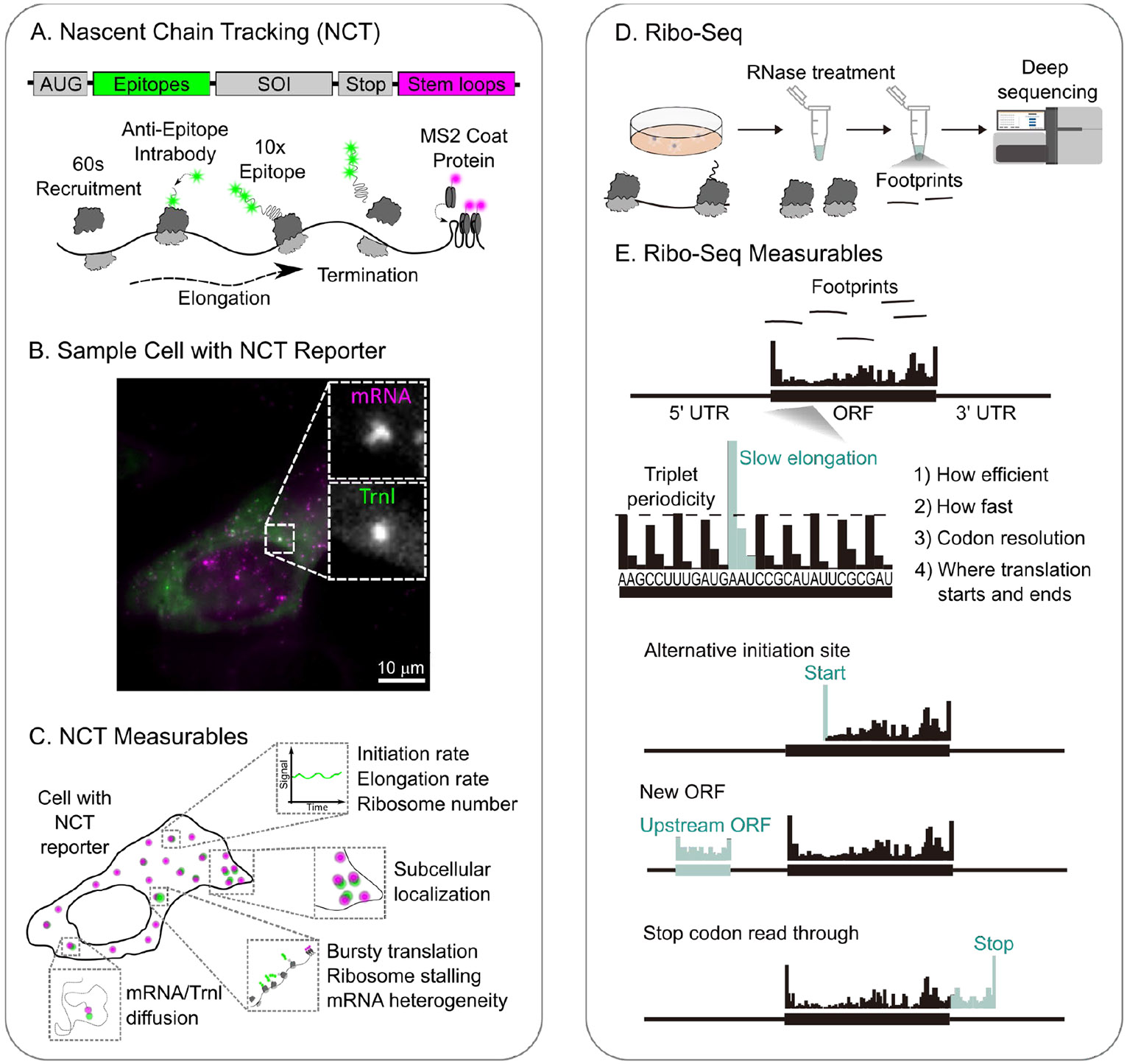
Bridging single-molecule and genome-wide studies of cellular mRNA translation. RNA.
Wu, B., et al. (2026). Bridging single-molecule and genome-wide studies of cellular mRNA translation. RNA.
Ribo-seq begins with the isolation of the cells of interest. The ribosomes and their associated mRNA complexes need to be separated to study their exact positions, and not just the general vicinity. Therefore, these cells are lysed either by utilizing a translational inhibitor or by flash freezing, effectively halting elongation. They are then treated with RNases that act as scissors to cut up the unprotected mRNA segments. Then, RPFs are obtained and converted into cDNA libraries for sequencing. The last step is data analysis and interpretation of results. Ribosome profiling was originally described in 2009, and since then, there have been multiple methodological improvements to reduce experimental bias and increase reproducibility. Recent protocol refinements include gel-free affinity-based purification of ribosome–mRNA complexes, optimized nuclease digestion conditions, and improved library construction strategies that enhance footprint recovery and sequencing accuracy. 1,2,4,5

OHMX.bio approach to ribo-seq

OHMX.bio focuses on improving ribosome profiling by addressing traditional data quality challenges in Ribo-seq research. The founding team has made substantial efforts to improve the ribosome profiling process, particularly using custom-designed capture probes that deplete ribosomal RNA. This innovation increases the ratio of reads that align with genuine ribosome-protected fragments over non-informative sequences. Furthermore, OHMX.bio incorporates quality control throughout the profiling process, evaluating samples at multiple stages, such as nuclease digestion efficiency, footprint size distribution, and library complexity, to identify and rectify potential issues before sequencing. A low-throughput sequencing run serves as a verification step to assess library quality and experimental integrity before the complete run. After sequencing, the data is processed through a bioinformatics workflow tailored for ribo-seq, enabling differential translational comparisons and identification of novel open reading frames that traditional methods might miss. This approach also includes applications like identifying stop-codon read-through events and integrating Ribo-seq data with immunopeptidomic datasets, which are increasingly important for discovering non-canonical peptides and understanding the translational landscape in disease contexts.6,7

Advantages over polysome profiling

Several approaches are available to assess global translational activity, each with distinct advantages and limitations. Ribosome profiling enhances the analysis of translation by mapping ribosome positions on mRNAs at sub-codon resolution, addressing limitations of polysome profiling, which only counts ribosome attachment without positional context. This advanced method allows the identification of alternative translation initiation sites, upstream open reading frames, and unknown coding regions. Additionally, it enables the study of codon-specific translational elongation regulation and preserves footprint length information related to ribosome conformations. Despite requiring normalization to mRNA abundance for efficient translation inference, ribosome profiling significantly improves mechanistic understanding of translational regulation compared to polysome profiling. Polysome profiling measures ribosome density on mRNAs and therefore does not provide information on ribosome location on transcripts. Conversely, ribosome profiling provides sub-codon resolution by sequencing ribosome-protected fragments, allowing precise mapping of ribosomes and identification of alternative translation initiation sites and non-canonical open reading frames. Analysis of ribosome footprint distribution further enables investigation of codon-specific regulation during translational elongation. Although translation efficiency is inferred indirectly and requires normalization to mRNA abundance, the increased resolution of ribosome profiling provides a more detailed view of translational regulation than polysome profiling.2,8

How riboseq differs from RNAseq

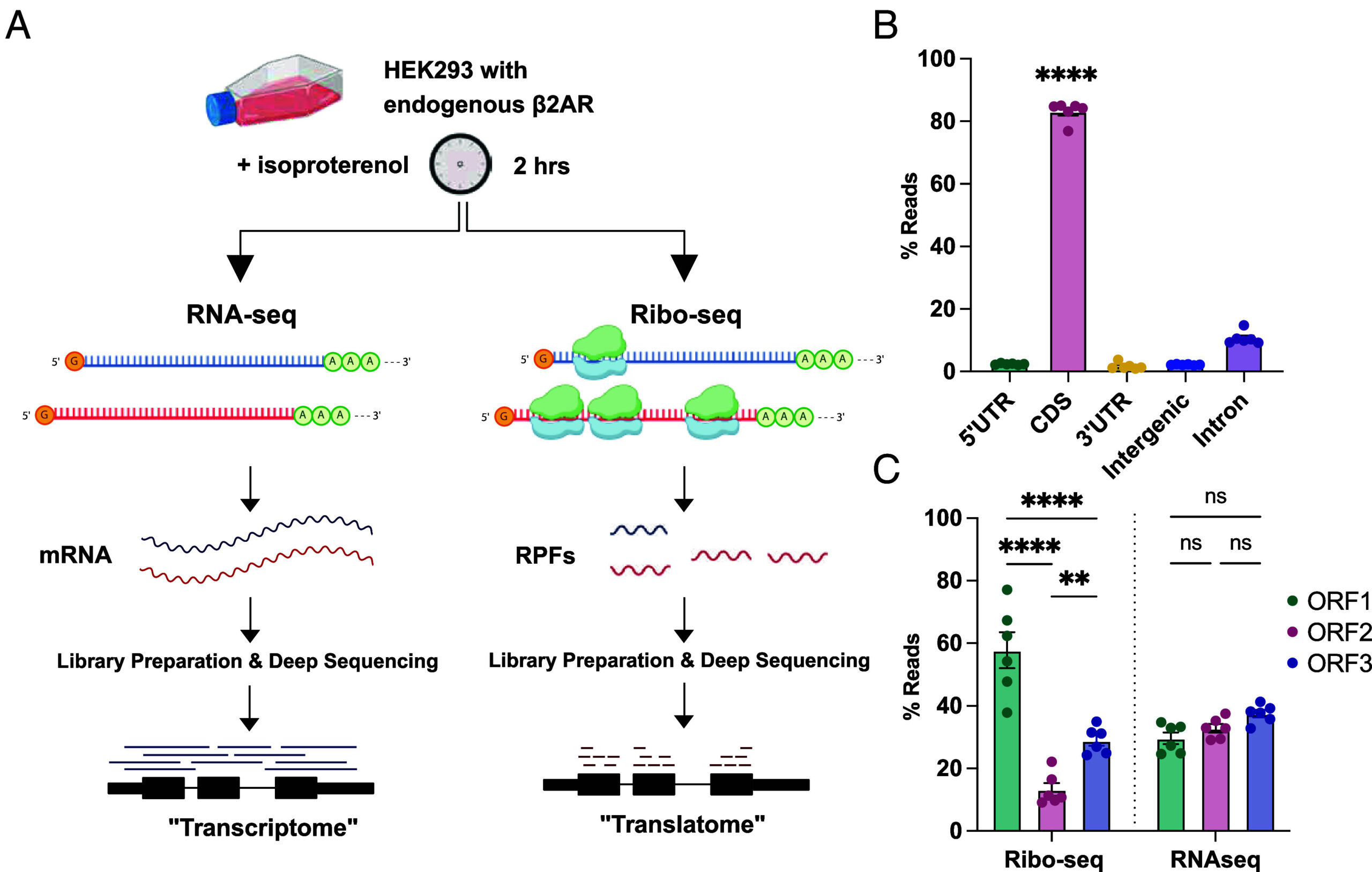
RNA-seq and ribosome profiling measure different aspects of gene expression. RNA-seq employs high-throughput sequencing to identify nucleotide sequences of RNA and quantify specific RNA species, offering a measure of mRNA abundance that indicates transcriptional output and RNA stability. In contrast, ribosome profiling sequences only the RPFs, capturing those mRNAs that are actively being translated by ribosomes into protein. Because ribosome profiling reveals where ribosomes are engaged in translation across the transcriptome, it offers a direct view of protein synthesis rather than transcript presence alone. RNA-seq in combination with ribosome profiling enables the differentiation of changes in transcript levels from changes in translation, allowing the study of translational regulation that cannot be deduced based on RNA levels alone.3
Extensive location bias of the GPCR-dependent translatome via site-selective activation of mTOR. PNAS.
Smith, E., et al. (2025). Extensive location bias of the GPCR-dependent translatome via site-selective activation of mTOR. PNAS.

Translation efficiency and ribosome occupancy

Integration of RNA-seq data and ribosome profiling allows computation of translation efficiency (TE), as the ratio of ribosome footprint abundance to mRNA abundance. This metric indicates the efficiency of a particular transcript being translated in relation to the level of its expression. Ribosome profiling directly measures ribosome occupancy on mRNAs, providing quantitative data on how many ribosomes are bound per transcript, whereas RNA-seq is a global measure of transcript abundance without any indication of translational activity. This integrated approach helps distinguish whether changes in protein output arise from transcriptional regulation, translational regulation, or both. In practice, suppliers such as OHMX.bio generate “matched mRNA-seq” data by performing RNA-seq on the same lysate samples used for ribosome profiling. This minimizes any technical variation between the two datasets and thus maximizes the accuracy of TE calculations. Consequently, observed differences in TE more reliably reflect biological regulation rather than experimental variation. This is particularly useful for studies where it is essential to accurately detect any differences in regulatory elements.

Detection of small and upstream ORFs

One of the benefits of ribosome profiling compared to RNA-Seq is that it can identify translated regions that can be inaccessible to RNA-Seq. The nucleotide-resolution sequencing of ribosome footprints made possible by Ribo-Seq allows the accurate identification of short open reading frames (sORFs), upstream ORFs (uORFs), and additional noncanonical ORFs that create weak or ambiguous signals by RNA-sequencing. These translated regions can encode small peptides or represent regulatory translation events that are not evident from transcriptome-only analyses.

Ribosome positioning and pausing

Unlike RNA-Seq, which only quantifies transcript abundance, ribosome profiling provides nucleotide-level resolution of ribosome positions on mRNAs by sequencing the exact ribosome-protected fragments. This positional information enables mapping of initiation sites, elongation dynamics, and potential ribosome pausing locations along coding regions, revealing detailed translational dynamics that cannot be obtained from RNA-seq alone.1,3,4,6,7,9

Applications and insights revealed by Riboseq

Ribosome profiling has been extensively used to reveal the regulation of translation in various biological settings. It has demonstrated dynamic alterations of protein synthesis throughout circadian cycles, in which rhythmic occupancy of ribosomes is independent of mRNA levels, and indicated translational control as a key player of circadian regulation. Ribo-seq has also revealed that cells can reprogram translation rapidly in response to stressors like hypoxia, selectively capturing ribosomes on stress-responsive transcripts, and in many cases using regulatory elements such as upstream ORF. Ribosome profiling in disease contexts, especially cancer, has revealed widespread translational rewiring, such as changes in translation efficiency, the activation of non-canonical ORFs within lncRNAs and circular RNAs, and the deregulation of oncogenic and metabolic regulation. These studies demonstrate that a significant number of regulatory and disease-related alterations occur at the level of translation and cannot be predicted based on transcript abundance alone. 5,10-12

Translational regulation in disease and development

Ribosome profiling has revealed that translational regulation is highly dynamic during both development and disease, often operating independently of transcriptional changes. Studies in mammalian systems show that during differentiation and tissue development, selective translation of specific mRNAs fine-tunes protein output without large shifts in mRNA abundance, allowing cells to rapidly adapt their proteomes to developmental cues. In a pathological state, particularly when subjected to stress, such as hypoxia or oncogenic transformation, Ribo-seq shows marked alterations in ribosome occupancy on key regulatory transcripts. The variation in ribosome engagement at 5 untranslated regions and varied sensitivities in transcripts with upstream ORFs are demonstrated in disease models to support the assumption that stress-related translational regulation alters gene expression programs. These findings highlight the importance of translation as a critical regulatory layer in disease progression and development that is frequently overlooked in transcriptome studies.

Novel peptides and microproteins

Ribo-seq has given rise to the identification of new peptides and microproteins being translated by sORFs, which were frequently overlooked because of biases in favor of larger coding entities. Ribo-seq detects active translation events that are frequently overlooked by proteomics analyses due to low protein levels or rapid turnover. Large-scale analyses have shown that translation outside canonical protein-coding regions is widespread, expanding the known coding capacity of genomes. Microproteins have been demonstrated to participate in cellular mechanisms such as signaling, stress responses, regulatory networks, and disrupt traditional coding-noncoding boundary so pure and simple.

Drug discovery and therapeutic interventions

Ribo-seq is increasingly applied in drug discovery by providing a direct readout of which transcripts are actively translated in disease states, enabling prioritization of targets that are functionally engaged at the protein synthesis level. It maps the effect of therapeutic compounds on translational landscapes, thereby identifying drug effects or drug resistance through changes in ribosome occupancy. Furthermore, translational signatures, such as upstream ORF or microprotein expression, are also promising as disease progression and treatment response biomarkers. More sophisticated computational approaches, such as deep learning to analyze the Ribo-seq data, also enhance the detection of ORFs and the identification of targets in related complex diseases, explaining the growing importance of ribosome profiling in translational studies. 1,12-15

Limitations and future directions

Ribosome profiling provides a genome-wide view of the translation process, but also has technical limitations that significantly affect data quality. It is a complex procedure and involves several critical steps, including translation arrest, nuclease digestion, footprint isolation, and library formation. Minor errors or interferences during these steps can cause footprint and ribosome position biases. Moreover, typical techniques require huge numbers of cells and thus are unsuitable for rare or clinically relevant samples.

Technical challenges

A major difficulty is ribosome stalling, which may reflect real regulatory effects, however, it might also be caused by experimental perturbations such as translation inhibitors or cell stress on harvesting. These effects can mimic the density of ribosomes in some codons or areas of the transcript artificially. Additional bias is introduced by nuclease digestion, where incomplete or biased codon-based analysis is likely to overrepresent or underscore the footprint distribution. To reduce artifacts and achieve precise measurements, optimization of digestion parameters and nucleases selection, and correction strategies involving computation are therefore necessary.

Integration with multiomics

To develop a comprehensive understanding of the regulation of gene expression, it is important to combine Ribo-seq with other omics technologies. Ribo-seq, together with RNA-seq, allows direct comparison of the level of transcripts and translational activity that cannot be determined at the transcriptional stage. When coupled with quantitative proteomics, it allows the correlation between ribosome occupancy and protein abundance and stability, thus offering a comprehensive view of how genes are regulated. Emerging multiomics approaches, enabled by sophisticated computational analysis, are thus placing Riboseq at the forefront of integrated translatomics and systems biology. 1,4,16

Frequently asked questions about ribosome profiling

Ribosome profiling reveals which mRNAs are actively translated into protein and where ribosomes are positioned on those transcripts at near single-codon resolution. RNA-seq only measures mRNA abundance, which reflects transcription and RNA stability but not protein synthesis. As a result, ribosome profiling uncovers translational regulation, ribosome pausing, alternative initiation sites, and non-canonical ORFs that cannot be inferred from RNA-seq data alone.
Ribosome profiling sequences ribosome-protected mRNA fragments (RPFs) that are physically shielded by translating ribosomes. Each RPF corresponds to the position of a single ribosome on an mRNA molecule. When aggregated across the transcriptome, RPF density provides a quantitative readout of translation rates, offering a direct genome-wide snapshot of active protein synthesis in vivo.
Translation efficiency is calculated by integrating ribosome profiling data with RNA-seq data, typically as the ratio of ribosome occupancy to mRNA abundance. This approach distinguishes whether changes in protein output arise from transcriptional regulation or translational control. Ribosome profiling is therefore essential for identifying transcripts whose protein production is regulated independently of mRNA levels.
Yes. Ribosome profiling can detect small ORFs (sORFs), upstream ORFs (uORFs), and other non-canonical coding regions that often escape detection by RNA-seq. Because Ribo-seq captures ribosome positions at nucleotide resolution, it reveals active translation events even in regions previously annotated as non-coding, enabling the discovery of microproteins and regulatory translation events.
Ribosome profiling is widely used in developmental biology, cancer research, stress response studies, and drug discovery. It reveals translational rewiring in disease states, identifies actively translated therapeutic targets, and maps drug-induced changes in protein synthesis. These insights are particularly valuable when transcriptional data alone fail to explain observed phenotypes or treatment responses.

Do you have questions about ribosome profiling?

Fill out the form below and our experts will get back to you as soon as possible!

References

  1. Limbu, M. S., Xiong, T., & Wang, S. (2024). A review of Ribosome profiling and tools used in Ribo-seq data analysis. Computational and Structural Biotechnology Journal23, 1912-1918.

  2. Jin, H. Y., & Xiao, C. (2017). An integrated polysome profiling and ribosome profiling method to investigate in vivo translatome. In Next generation sequencing: Methods and protocols (pp. 1-18). New York, NY: Springer New York.

  3. RNA-Seq vs Ribosome Profiling: Unveiling Gene Expression at Different Levels. Assessed from https://rna.cd-genomics.com/resource/rna-seq-vs-ribosome-profiling.html.

  4. Tomuro, K., & Iwasaki, S. (2025). Advances in ribosome profiling technologies.  Biochemical Society Transactions, BST20253061.

  5. Brar, G. A., & Weissman, J. S. (2015). Ribosome profiling reveals the what, when, where and how of protein synthesis. Nature reviews Molecular cell biology16(11), 651-664.

  6. Ribosomal profiling (RIBO-seq). Assessed from https://staging.ohmx.bio/ribosomal-profiling-ribo-seq/.

  7. Ribosome profiling: Unlocking the translational landscape. Assessed from https://staging.ohmx.bio/ribosome-profiling-unlocking-the-translational-landscape/.

  8. Polysome Profiling Vs Ribosome Profiling: Unraveling Translation Dynamics. Assessed from https://rna.cd-genomics.com/resource/polysome-profiling-vs-ribosome-profiling.html.

  9. Ingolia, N. T., Brar, G. A., Stern-Ginossar, N., Harris, M. S., Talhouarne, G. J., Jackson, S. E., … & Weissman, J. S. (2014). Ribosome profiling reveals pervasive translation outside of annotated protein-coding genes. Cell reports8(5), 1365-1379.

  10. Janich, P., Arpat, A. B., Castelo-Szekely, V., Lopes, M., & Gatfield, D. (2015). Ribosome profiling reveals the rhythmic liver translatome and circadian clock regulation by upstream open reading frames. Genome research25(12), 1848-1859.

  11. Jiang, Z., Yang, J., Dai, A., Wang, Y., Li, W., & Xie, Z. (2017). Ribosome profiling reveals translational regulation of mammalian cells in response to hypoxic stress. BMC genomics18(1), 638.

  12. Su, D., Ding, C., Qiu, J., Yang, G., Wang, R., Liu, Y., … & Zhang, T. (2024). Ribosome profiling: a powerful tool in oncological research. Biomarker Research12(1), 11.

  13. Bagheri, A., Astafev, A., Al-Hashimy, T., & Jiang, P. (2022). Tracing translational footprint by Ribo-Seq: principle, workflow, and applications to understand the mechanism of Human diseases. Cells11(19), 2966.

  14. Vieira de Souza, E., L. Bookout, A., Barnes, C. A., Miller, B., Machado, P., Basso, L. A., … & Saghatelian, A. (2024). Rp3: Ribosome profiling-assisted proteogenomics improves coverage and confidence during microprotein discovery. Nature Communications15(1), 6839.

  15. Analysis of translatome by Ribo-Seq (https://www.unige.ch/medecine/r2p/R2P/r2p-services/r2p-services/ribo-seq?).

  16. Wang, Q., & Mao, Y. (2023). Principles, challenges, and advances in ribosome profiling: from bulk to low-input and single-cell analysis. Advanced Biotechnology1(4), 6.

Search all posts

Popular news & events

Tags

Your Partner for Innovative OMICS Solutions
Privacy Overview

This website uses cookies so that we can provide you with the best user experience possible. Cookie information is stored in your browser and performs functions such as recognising you when you return to our website and helping our team to understand which sections of the website you find most interesting and useful.

Cookie statement

Last updated:  19-09-2024

This cookie statement is drafted and managed by OHMX.bio NV,

hereafter referred to as “OHMX.bio”.

OHMX.bio has its headquarters at Proeftuinstraat 86, 9000 Gent, Belgium, registered with company number XXX.

For all questions and/or remarks, please contact us at the address mentioned above or at the e-mail address privacy@ohmx.bio.

USE OF COOKIES


OHMX.bio considers it important that you can view, listen to, read or experience our website content at any place and at any time via various media platforms. We want you to be able to use interactive features and provide services tailored to your needs. Therefore OHMX.BIO uses online techniques like cookies, scripts and similar technologies (hereafter referred to as ‘cookies’). These help us facilitate the use of the website and improve its functionality, by collecting (personal) data of our website visitors via their website usage.


In this cookie statement, OHMX.bio wishes to inform you what kind of cookies are used and why.

OHMX.bio can amend the cookie statement at any time. This can happen, for example, in the context of changes to its services or the applicable legislation. The amended statement will then be published on the OHMX.bio websites and will apply from the moment it is published.


If the use of certain cookies also involves the processing of “personal data”, the OHMX.bio Privacy Statement is also applicable.


WHAT ARE COOKIES?


A cookie is a small data file that is installed in the browser of your computer or mobile device by a website's server or application when you visit a website or use a (mobile) application.

The cookie file contains a unique code with which your browser can be recognized during the visit to the online service or during consecutive, repeated visits. They generally make the interaction between the visitor and the website or application easier and faster and help the visitor to navigate between the different parts of a website or application. They allow us to retain certain settings, such as your language choice or to optimize your user experience.


There are different types of cookies that can be distinguished according to their origin, function and lifespan. This is explained further in the next section.

TYPES OF COOKIES

How long are cookies stored?

Cookies can be stored on your computer or mobile device for different periods of time. Depending on the type, they (and the information they collect) are automatically deleted when you close your browser (these are the so-called “session cookies”), in other cases, these remain stored for a longer period of time and can also be used during a subsequent visit to this website (these are the so-called “permanent cookies”).

Consult the detailed information on OHMX.bio cookies (below) to know the retention periods.

Who places and manages cookies?

First-party cookies

First-party cookies are managed by OHMX.bio and are specific to the visited or used online service.

Third party cookies

Third party cookies are managed and placed by a third party. This happens during your visit or use of the website. These ensure that certain information is sent to third parties by your visit to the website.

Why cookies?

Necessary cookies

Necessary or essential cookies are necessary for the operation of the website. It is therefore advised not to disable these.

Functional cookies

These are cookies that ensure that the website functions properly. Examples of some functions performed:

- remembering your login details

- ensuring the security of your login details

- ensuring the uniformity of the layout of the website

Performance and analysis cookies

On the basis of these cookies, information is collected about the way visitors use our website. This is done with the intention to improve the content of our websites, to further adapt it to the wishes of the visitors and to increase the usability of our websites. Like for example google analytics.

Social media cookies

The website can implement so-called embedded elements of other third parties, such as YouTube, Twitter and Facebook. These are used to integrate social media into the website via plug-ins.

Other cookies

These are cookies that do not belong to one of the above categories. For example, cookies that can be used to make web analyzes themselves to optimize the website. In addition to the above-mentioned performance and analysis cookies, other web analysis cookies can be used. These will probably have to be disabled because identifiable personal data may be processed here. This is not the case with the mentioned performance analysis cookies.

OHMX.bio  uses different types of cookies.


Cookie Description Duration Type
cookielawinfo-checkbox-necessary This cookie is set by GDPR Cookie Consent plugin. The cookies is used to store the user consent for the cookies in the category "Necessary". 1 hour Necessary
__utma This cookie is set by Google Analytics and is used to distinguish users and sessions. The cookie is created when the JavaScript library executes and there are no existing __utma cookies. The cookie is updated every time data is sent to Google Analytics. 2 years Performance
__utmc The cookie is set by Google Analytics and is deleted when the user closes the browser. The cookie is not used by ga.js. The cookie is used to enable interoperability with urchin.js which is an older version of Google analytics and used in conjunction with the __utmb cookie to determine new sessions/visits. Performance
__utmz This cookie is set by Google analytics and is used to store the traffic source or campaign through which the visitor reached your site. 5 months Performance
__utmt The cookie is set by Google Analytics and is used to throttle request rate. 10 minutes Performance
__utmb The cookie is set by Google Analytics. The cookie is used to determine new sessions/visits. The cookie is created when the JavaScript library executes and there are no existing __utma cookies. The cookie is updated every time data is sent to Google Analytics. 30 minutes Performance


HOW CAN YOU TURN OFF COOKIES?


If you choose to disable cookies, you can do so for the browser you use:


If you use different devices to visit this website, make sure that your cookie preferences are set on the browser of every device.


Please note that disabling certain cookies may result in the malfunction of related features on the website e.g. certain graphics may not show the way they are meant to, or you may not be able to use certain services.

CHANGES TO THIS COOKIE STATEMENT

OHMX.BIO may amend this Cookie Statement in accordance with certain technical, legal or commercial requirements and developments. We will inform you accordingly, taking into account the importance of the changes that have been made. You may find the date on which this Cookie Statement was last modified at the top of this Cookie Statement.