
Rare diseases: Advancing precision medicine for complex disorders

Rare diseases represent a diverse group of more than 7,000 disorders, many of which remain genetically unresolved. Although individually rare, their collective impact on patients and healthcare systems is substantial. The diagnostic journey is often prolonged due to genetic heterogeneity, structural variation, and regulatory mutations that are not easily captured by conventional approaches. At OHMX.bio, we apply advanced omics technologies to uncover the molecular mechanisms underlying rare diseases and to support translational research aimed at improving diagnostic accuracy and therapeutic development.

Navigating the complexities of cell and gene therapy with OHMX.bio

The landscape of biologics, from engineered cell lines to viral vectors and mRNA constructs, demands rigorous quality control at every stage of development and manufacturing. Traditional QC methods often fall short in providing the precise, in-depth genetic and epigenetic insights required for these complex therapeutics. OHMX.bio bridges this gap by applying state-of-the-art sequencing, particularly Oxford Nanopore long-read sequencing, as a central tool for the quality control of biologics. This platform allows for complete and highly accurate sequence analysis of complex biological products, including mRNA constructs, plasmids, viral genomes, and engineered cell lines. Long-read sequencing enables the direct detection of full-length molecules, structural variants, and epigenetic modifications in a single run, providing deeper insights than conventional short-read or PCR-based methods.

Precision omics for rare disease research

Rare diseases frequently involve complex genomic rearrangements, repeat expansions, splicing defects, or regulatory alterations. Resolving these mechanisms requires integrated molecular profiling across multiple biological layers.

Genomic and long-read sequencing

Whole-genome and whole-exome sequencing are central tools in rare disease research. However, unresolved cases often involve structural variants or repetitive regions that remain difficult to interpret using short-read sequencing alone.
Our long-read sequencing platforms enable the detection of structural variants, repeat expansions, and complex genomic rearrangements with high resolution. This approach improves variant interpretation, phasing, and characterization of challenging genomic regions, significantly enhancing diagnostic yield.

Transcriptomics and isoform analysis

Many rare disorders are driven by aberrant splicing events or altered gene expression. Through RNA sequencing and full-length transcript analysis, we assess transcript isoforms, identify expression outliers, and evaluate the functional consequences of genomic variants. Integrating DNA and RNA data strengthens genotype–phenotype correlations and supports more confident classification of candidate variants.

Proteomics and metabolomics integration

Genomic findings alone do not always explain disease pathology. Our mass spectrometry-based proteomics and metabolomics workflows provide complementary insights into dysregulated pathways and disease-associated molecular signatures. By integrating multi-omics datasets, we move beyond variant detection toward mechanistic understanding.

Advanced bioinformatics and data interpretation

Rare disease research generates complex, high-dimensional datasets that require rigorous analysis. Our bioinformatics team performs structural variant detection, variant prioritization, cross-omics integration, and functional annotation. This ensures that molecular findings are translated into biologically meaningful and clinically relevant insights.

OHMX.bio - Innovative omics solutions

Case study

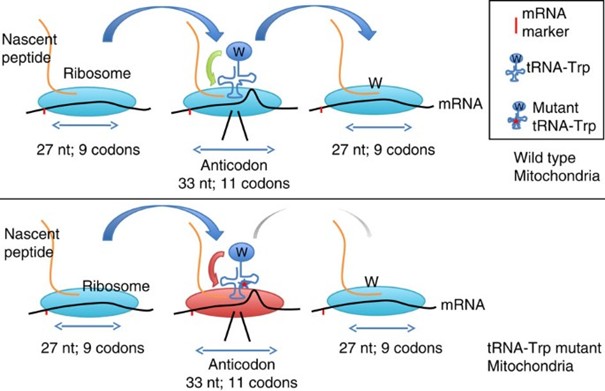
In a multi-omic study published in Nature Communications (Rooijers, K., Loayza-Puch, F., Nijtmans, L. et al. Ribosome profiling reveals features of normal and disease-associated mitochondrial translation. Nat Commun 4, 2886 (2013)), researchers utilized a combination of Whole-Genome Sequencing (WGS), RNA-seq, and Ribosome Profiling (Ribo-seq) to resolve the “missing heritability” in a patient with a suspected mitochondrial disorder. While DNA and RNA analyses failed to identify a clear pathogenic cause, the integration of Ribo-seq revealed that a rare variant in the 5′ untranslated region (5′ UTR) created an upstream Open Reading Frame (uORF) that sequestered ribosomes, effectively blocking the translation of the essential protein despite normal mRNA levels. This case highlights how translatomics can identify “invisible” functional null alleles, providing a definitive diagnosis for rare diseases where traditional genomics and transcriptomics remain inconclusive.
Schematic model for ribosome stalling at codons translated by affected tRNAs, explaining the unbalanced generation of long RPFs in mutant mitochondria. (source: Fig 6 in Rooijers et al., 2013)

Partner with OHMX.bio for your rare disease research

OHMX.bio combines state-of-the-art sequencing platforms, mass spectrometry technologies, and advanced bioinformatics expertise to accelerate rare disease discovery. We collaborate closely with academic institutions, clinical researchers, and biotechnology partners to transform complex molecular data into actionable insights.
OHMX.bio_Innovative omics solutions_Tailored Personal Approach

Let’s get in touch!

Interested in discussing how multi-omics approaches can support your rare disease project?
Our experts are ready to explore tailored solutions aligned with your research objectives.
Our experts will reply within 2 working days to freely discuss your omics project.

Our publications using our cell en gene therapies

  1.  
Logo-OHMX.bio
Privacy Overview

This website uses cookies so that we can provide you with the best user experience possible. Cookie information is stored in your browser and performs functions such as recognising you when you return to our website and helping our team to understand which sections of the website you find most interesting and useful.

Cookie statement

Last updated:  19-09-2024

This cookie statement is drafted and managed by OHMX.bio NV,

hereafter referred to as “OHMX.bio”.

OHMX.bio has its headquarters at Proeftuinstraat 86, 9000 Gent, Belgium, registered with company number XXX.

For all questions and/or remarks, please contact us at the address mentioned above or at the e-mail address privacy@ohmx.bio.

USE OF COOKIES


OHMX.bio considers it important that you can view, listen to, read or experience our website content at any place and at any time via various media platforms. We want you to be able to use interactive features and provide services tailored to your needs. Therefore OHMX.BIO uses online techniques like cookies, scripts and similar technologies (hereafter referred to as ‘cookies’). These help us facilitate the use of the website and improve its functionality, by collecting (personal) data of our website visitors via their website usage.


In this cookie statement, OHMX.bio wishes to inform you what kind of cookies are used and why.

OHMX.bio can amend the cookie statement at any time. This can happen, for example, in the context of changes to its services or the applicable legislation. The amended statement will then be published on the OHMX.bio websites and will apply from the moment it is published.


If the use of certain cookies also involves the processing of “personal data”, the OHMX.bio Privacy Statement is also applicable.


WHAT ARE COOKIES?


A cookie is a small data file that is installed in the browser of your computer or mobile device by a website's server or application when you visit a website or use a (mobile) application.

The cookie file contains a unique code with which your browser can be recognized during the visit to the online service or during consecutive, repeated visits. They generally make the interaction between the visitor and the website or application easier and faster and help the visitor to navigate between the different parts of a website or application. They allow us to retain certain settings, such as your language choice or to optimize your user experience.


There are different types of cookies that can be distinguished according to their origin, function and lifespan. This is explained further in the next section.

TYPES OF COOKIES

How long are cookies stored?

Cookies can be stored on your computer or mobile device for different periods of time. Depending on the type, they (and the information they collect) are automatically deleted when you close your browser (these are the so-called “session cookies”), in other cases, these remain stored for a longer period of time and can also be used during a subsequent visit to this website (these are the so-called “permanent cookies”).

Consult the detailed information on OHMX.bio cookies (below) to know the retention periods.

Who places and manages cookies?

First-party cookies

First-party cookies are managed by OHMX.bio and are specific to the visited or used online service.

Third party cookies

Third party cookies are managed and placed by a third party. This happens during your visit or use of the website. These ensure that certain information is sent to third parties by your visit to the website.

Why cookies?

Necessary cookies

Necessary or essential cookies are necessary for the operation of the website. It is therefore advised not to disable these.

Functional cookies

These are cookies that ensure that the website functions properly. Examples of some functions performed:

- remembering your login details

- ensuring the security of your login details

- ensuring the uniformity of the layout of the website

Performance and analysis cookies

On the basis of these cookies, information is collected about the way visitors use our website. This is done with the intention to improve the content of our websites, to further adapt it to the wishes of the visitors and to increase the usability of our websites. Like for example google analytics.

Social media cookies

The website can implement so-called embedded elements of other third parties, such as YouTube, Twitter and Facebook. These are used to integrate social media into the website via plug-ins.

Other cookies

These are cookies that do not belong to one of the above categories. For example, cookies that can be used to make web analyzes themselves to optimize the website. In addition to the above-mentioned performance and analysis cookies, other web analysis cookies can be used. These will probably have to be disabled because identifiable personal data may be processed here. This is not the case with the mentioned performance analysis cookies.

OHMX.bio  uses different types of cookies.


Cookie Description Duration Type
cookielawinfo-checkbox-necessary This cookie is set by GDPR Cookie Consent plugin. The cookies is used to store the user consent for the cookies in the category "Necessary". 1 hour Necessary
__utma This cookie is set by Google Analytics and is used to distinguish users and sessions. The cookie is created when the JavaScript library executes and there are no existing __utma cookies. The cookie is updated every time data is sent to Google Analytics. 2 years Performance
__utmc The cookie is set by Google Analytics and is deleted when the user closes the browser. The cookie is not used by ga.js. The cookie is used to enable interoperability with urchin.js which is an older version of Google analytics and used in conjunction with the __utmb cookie to determine new sessions/visits. Performance
__utmz This cookie is set by Google analytics and is used to store the traffic source or campaign through which the visitor reached your site. 5 months Performance
__utmt The cookie is set by Google Analytics and is used to throttle request rate. 10 minutes Performance
__utmb The cookie is set by Google Analytics. The cookie is used to determine new sessions/visits. The cookie is created when the JavaScript library executes and there are no existing __utma cookies. The cookie is updated every time data is sent to Google Analytics. 30 minutes Performance


HOW CAN YOU TURN OFF COOKIES?


If you choose to disable cookies, you can do so for the browser you use:


If you use different devices to visit this website, make sure that your cookie preferences are set on the browser of every device.


Please note that disabling certain cookies may result in the malfunction of related features on the website e.g. certain graphics may not show the way they are meant to, or you may not be able to use certain services.

CHANGES TO THIS COOKIE STATEMENT

OHMX.BIO may amend this Cookie Statement in accordance with certain technical, legal or commercial requirements and developments. We will inform you accordingly, taking into account the importance of the changes that have been made. You may find the date on which this Cookie Statement was last modified at the top of this Cookie Statement.