OHMX.bio_Long-read sequencing

Long-read sequencing

OHMX.bio is an early-certified provider of Oxford Nanopore sequencing, with years of hands-on experience. This deep expertise allows us to effectively implement long-read solutions for a wide variety of research projects, ensuring our partners receive accurate and insightful genomic data tailored to their needs.

Long vs. short-read sequencing

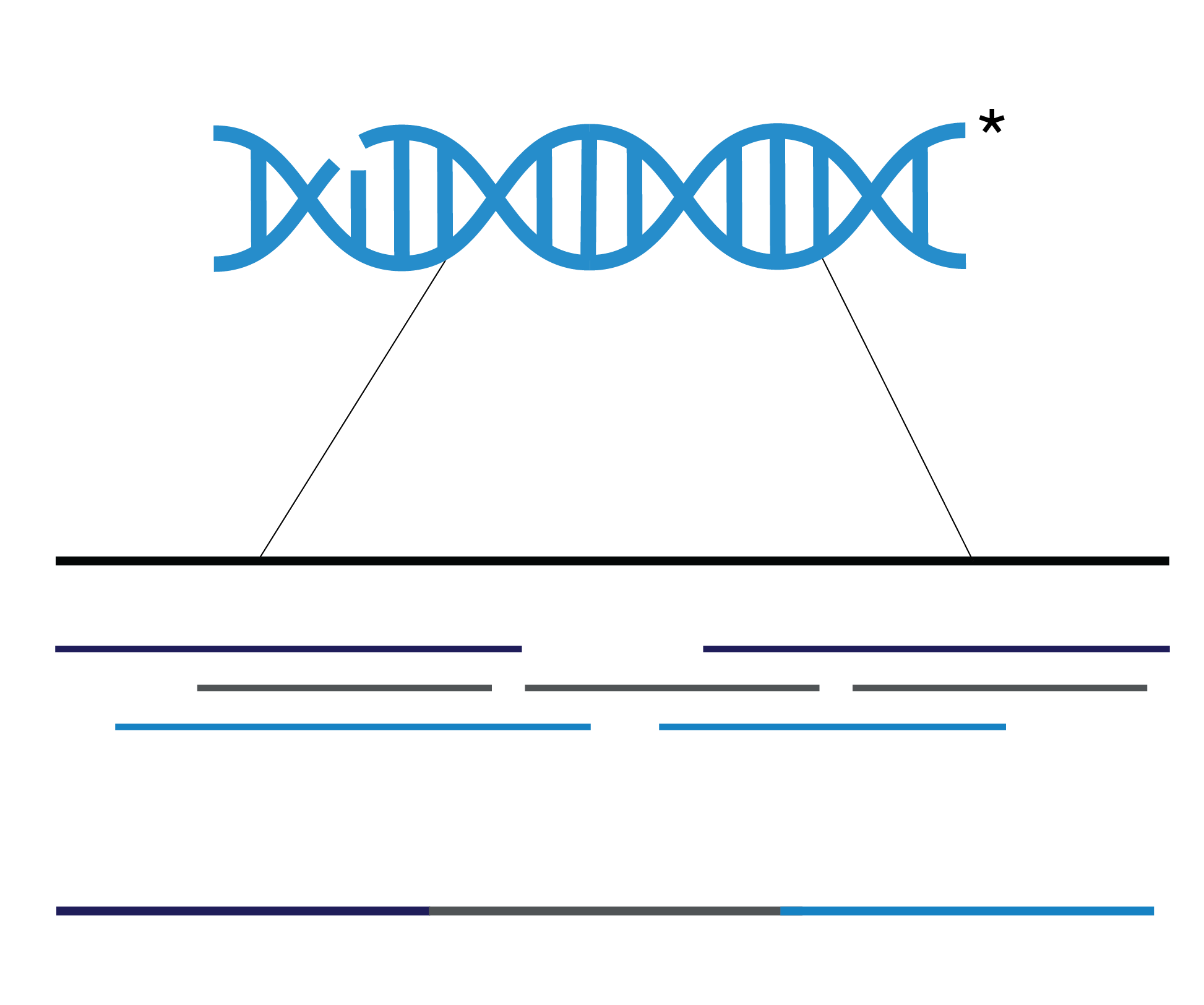
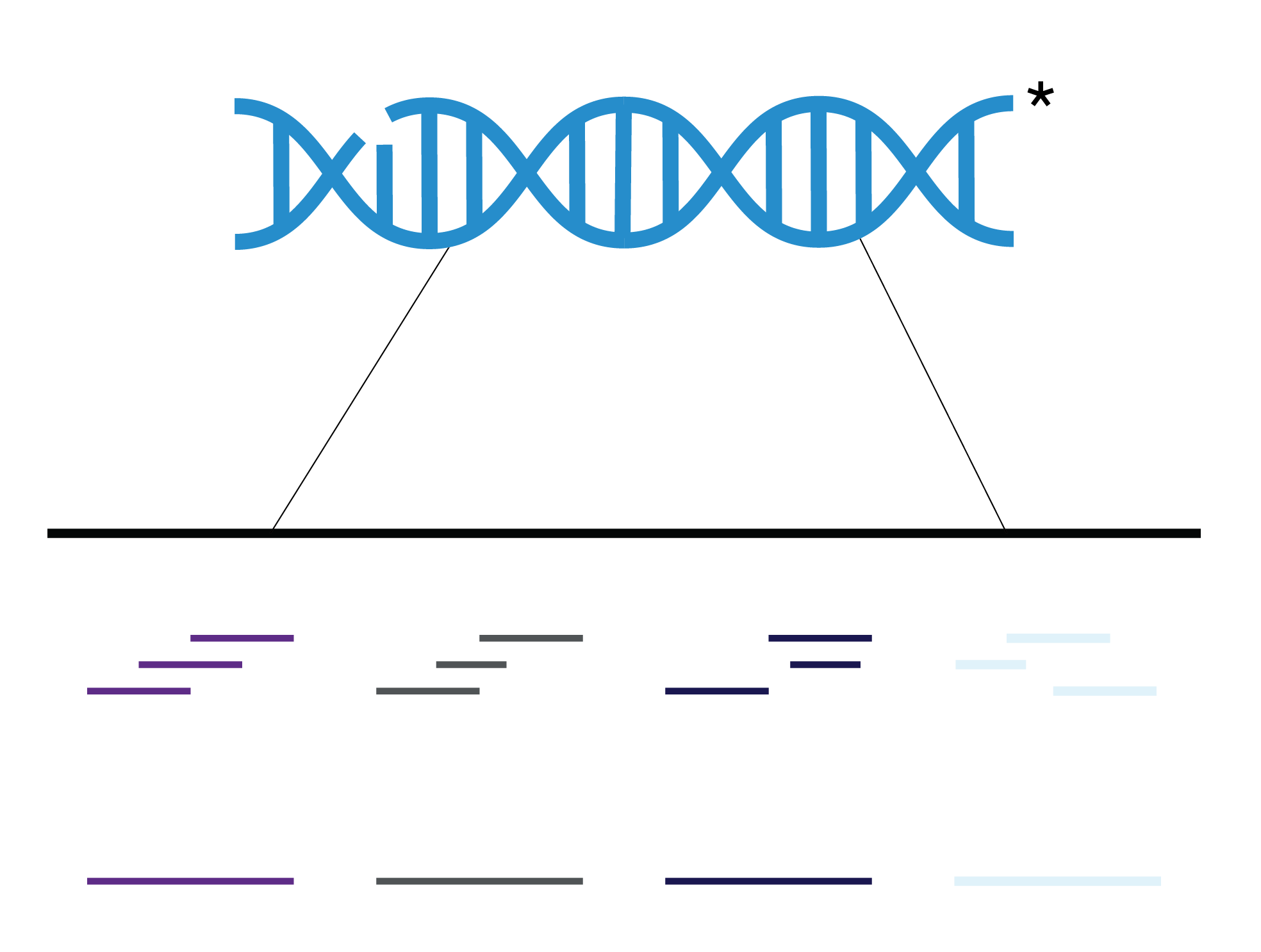
Traditional short-read sequencing technologies rely on assembling fragmented DNA sequences, which can lead to ambiguities in repetitive or structurally complex regions. In contrast, long-read sequencing captures contiguous DNA or RNA molecules, allowing for superior resolution of genomic architecture, transcript isoforms, and epigenetic modifications.
*Applicable to DNA and RNA.

Advantages of long-read sequencing

Complete Genome Assembly

Resolves repetitive and highly complex regions without the need for extensive computational reconstruction.

Structural Variant Detection

Identifies large-scale insertions, deletions, inversions, and copy number variations with high accuracy.

Full-Length Transcript Analysis

Accurately characterizes alternative splicing and isoform diversity in RNA sequencing.

Epigenetic Insights

Detects DNA and RNA modifications directly from sequencing data without additional sample processing.

Real-Time Analysis

Enables adaptive sampling and real-time data processing for targeted sequencing applications.

OHMX.bio - Innovative omics solutions
OHMX.bio_Innovative omics solutions_Scientific Excellence

Applications of long-read sequencing

De Novo Genome Assembly

Ideal for sequencing novel or highly complex genomes, long-read sequencing eliminates assembly gaps, ensuring a more complete and contiguous reference genome.

Comprehensive Transcriptomics

Capturing full-length transcripts enables an accurate representation of alternative splicing events, fusion transcripts, and non-coding RNA species, essential for functional genomics studies.

Biologics Characterization & CQA Determination

Long-read sequencing plays a critical role in Critical Quality Attribute (CQA) determination of biologics, providing high-resolution structural insights into gene edits, recombinant protein production, and vector integrity assessment.

Microbiome Analysis & Full-Length 16S Sequencing

Unlike short-read methods, which sequence only a fraction of the 16S rRNA gene, long-read sequencing allows for full-length 16S profiling, leading to more accurate microbial identification and improved taxonomic resolution.

Let’s get in touch!

Are you curious about how we can work on your -omics challenges together? Fill out the form below!
Our experts will reply within 2 working days to freely discuss your omics project.

Publications using our long-read services

  1. Tytgat, Olivier, et al. “Nanopore sequencing of a forensic STR multiplex reveals loci suitable for single-contributor STR profiling.” Genes 11.4 (2020): 381.

  2. Verbruggen, Steven, et al. “Spectral prediction features as a solution for the search space size problem in proteogenomics.” Molecular & Cellular Proteomics 20 (2021).

  3. Clavijo, Felipe, et al. “Complete genome sequence resource for Xanthomonas translucens pv. undulosa MAI5034, a wheat pathogen from Uruguay.” Phytopathology® 112.9 (2022): 2036-2039.

  4. Pérez-Quintero, Alvaro L., et al. “Comparative genomics identifies conserved and variable TAL effectors in African strains of the cotton pathogen Xanthomonas citri pv. malvacearum.” Phytopathology® 113.8 (2023): 1387-1393.

  5. Iyer, Shruti V., Sara Goodwin, and William Richard McCombie. “Leveraging the power of long reads for targeted sequencing.” Genome Research 34.11 (2024): 1701-1718

  6. Meral, S. E., et al. “Complete genome sequence of Xanthomonas campestris pv. campestris SB80, a race 4 strain isolated from white head cabbage in Turkey.” (2022).

  7. Erken Meral, Songül, et al. “Complete genome sequence of Xanthomonas campestris pv. campestris SB80, a race 4 strain isolated from white head cabbage in Turkey.” Microbiology Resource Announcements 11.3 (2022): e00022-22.