
Immunopeptidomics

Immunopeptidomics services

At OHMX.bio, we offer advanced immunopeptidomics services designed to characterize and quantify peptides presented by Major Histocompatibility Complexes (MHCs). This powerful approach provides valuable insights into immune-related processes and aids in the discovery of novel biomarkers and therapeutic targets.

Why immunopeptidomics?

Unlike standard proteomics, which focuses on identifying and quantifying all proteins within a sample, immunopeptidomics specifically examines peptides presented by MHC molecules. These peptides represent the “visible” portion of the immune response, providing direct insights into antigen presentation and immune recognition. This makes immunopeptidomics particularly valuable for cancer immunotherapy, infectious disease research, and autoimmune disease studies.

Our immunopeptidomics workflow

1. Sample Preparation

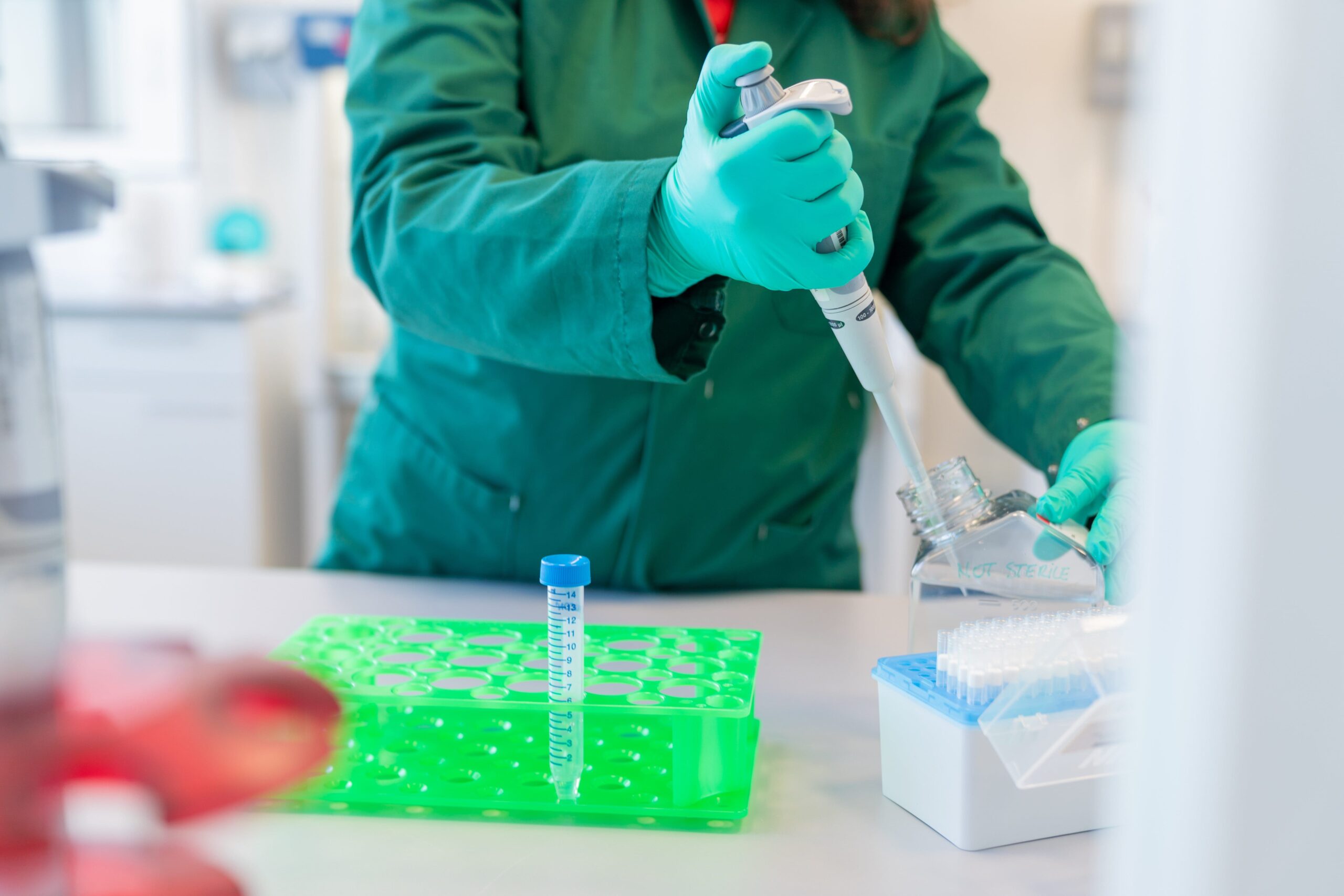
Biological samples are processed to isolate MHC-bound peptides through immunoaffinity purification techniques. Typical samples are cell lines, tissue samples and PBMC's or isolated immune cells

2. Mass Spectrometry Analysis

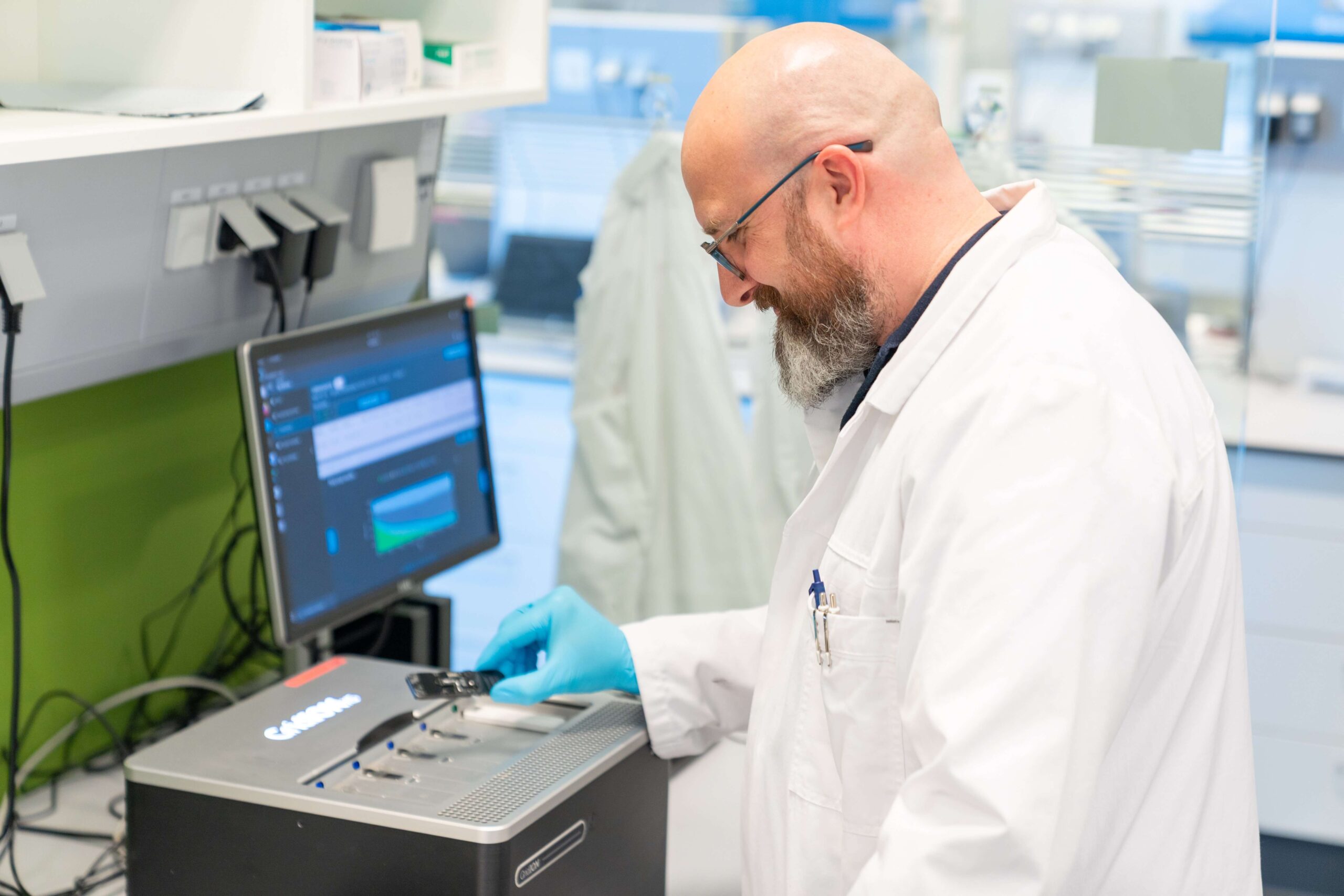
The purified peptides are analyzed using high-resolution mass spectrometry, enabling precise identification and quantification of the presented peptide repertoire.

3. Data Processing & Interpretation

Collected data is processed using state-of-the-art bioinformatics tools to characterize peptide sequences, predict antigenicity, and generate actionable insights. Typical output includes quantification and identity of peptides, peptide length distribution and (implied) motif analysis
OHMX.bio_Innovative omics solutions
OHMX.bio

Main applications for immunopeptidomics

The primary utility of immunopeptidomics lies in its ability to directly identify the specific peptide antigens that trigger T-cell responses. This has profound implications across several key research domains:

Oncology and Immuno-Oncology

Immunopeptidomics enables the discovery of tumor-associated antigens (TAAs) and patient-specific neoantigens arising from tumor mutations. These epitopes are prime targets for the development of personalized cancer vaccines, adoptive T-cell therapies (e.g., CAR-T, TCR-T), and immune checkpoint inhibitor biomarkers.

Infectious Disease and Vaccinology

Immunopeptidomics facilitates the rational design of vaccines by identifying the immunodominant epitopes derived from viral or bacterial pathogens that elicit protective T-cell immunity.

Autoimmunity and Transplantation

Immunopeptidomics allows for the characterization of the autoantigen repertoire responsible for pathogenic T-cell activation in autoimmune diseases. Similarly, it can identify alloantigens relevant to graft-versus-host disease in transplantation contexts.

Our immunopeptidomics services are tailored to meet the specific needs of your research, providing high sensitivity and reproducibility throughout the process. Contact us to learn more about how OHMX.bio can support your immunopeptidomics projects.

FAQ

The primary application of immunopeptidomics is the empirical identification of T-cell epitopes for therapeutic or diagnostic purposes. In immuno-oncology, it is used to discover tumor-associated antigens and neoantigens, which serve as targets for personalized cancer vaccines and adoptive T-cell therapies. In vaccinology and infectious disease research, it identifies immunodominant epitopes from pathogens to enable rational vaccine design. For autoimmune disorders, it is used to define the specific autoantigens that are pathologically targeted by the immune system.
What are the primary applications of immunopeptidomics?
The primary application of immunopeptidomics is the empirical identification of T-cell epitopes for therapeutic or diagnostic purposes. In immuno-oncology, it is used to discover tumor-associated antigens and neoantigens, which serve as targets for personalized cancer vaccines and adoptive T-cell therapies. In vaccinology and infectious disease research, it identifies immunodominant epitopes from pathogens to enable rational vaccine design. For autoimmune disorders, it is used to define the specific autoantigens that are pathologically targeted by the immune system.
The core methodology combines affinity purification with mass spectrometry. The process begins with the biochemical isolation of peptide-MHC (pMHC) complexes from a biological sample using specific antibodies. Peptides are then eluted from the MHC molecules and the resulting peptide mixture is analyzed by liquid chromatography-tandem mass spectrometry (LC-MS/MS). The LC-MS/MS platform measures the mass-to-charge ratio and fragmentation patterns of the peptides, enabling the precise determination of their amino acid sequences. Finally, bioinformatic algorithms map these sequences to their source proteins to construct a comprehensive profile of the immunopeptidome.
The raw output from an immunopeptidomics analysis is a large dataset of mass spectra. After processing through a bioinformatic pipeline, the final deliverable is typically a list of identified peptide sequences, each with an associated confidence score. This list includes information on the protein of origin for each peptide and often includes quantitative data, such as peptide intensity or spectral counts, which can be used to estimate the relative abundance of each peptide on the cell surface. Further analysis can predict the MHC allele to which each peptide binds.

Our streamlined workflow ensures an efficient turnaround for immunopeptidomics projects. The process consists of three main phases. The initial sample preparation and MHC-peptide isolation involve several days of precise lab work. The mass spectrometry analysis itself is quite rapid, typically requiring only a few hours per sample. Finally, our specialized bioinformatic software significantly accelerates data processing, allowing for a comprehensive analysis and interpretation to be delivered in a matter of days.

Immunopeptidomic analyses can be combined with various other -omics analyses. Genome sequencing can be used to detect variants of the MHC complex (e.g. using our long-read solutions) while RNAseq and Ribo-Seq can be used to uncover dark antigens. OHMX.bio offers this full pipeline.

Let’s get in touch!

Are you curious about how we can work on your -omics challenges together? Fill out the form below!
Our experts will reply within 2 working days to freely discuss your omics project.

Our publications using immunopeptidomics services

  1.  
Logo-OHMX.bio
Privacy Overview

This website uses cookies so that we can provide you with the best user experience possible. Cookie information is stored in your browser and performs functions such as recognising you when you return to our website and helping our team to understand which sections of the website you find most interesting and useful.

Cookie statement

Last updated:  19-09-2024

This cookie statement is drafted and managed by OHMX.bio NV,

hereafter referred to as “OHMX.bio”.

OHMX.bio has its headquarters at Proeftuinstraat 86, 9000 Gent, Belgium, registered with company number XXX.

For all questions and/or remarks, please contact us at the address mentioned above or at the e-mail address privacy@ohmx.bio.

USE OF COOKIES


OHMX.bio considers it important that you can view, listen to, read or experience our website content at any place and at any time via various media platforms. We want you to be able to use interactive features and provide services tailored to your needs. Therefore OHMX.BIO uses online techniques like cookies, scripts and similar technologies (hereafter referred to as ‘cookies’). These help us facilitate the use of the website and improve its functionality, by collecting (personal) data of our website visitors via their website usage.


In this cookie statement, OHMX.bio wishes to inform you what kind of cookies are used and why.

OHMX.bio can amend the cookie statement at any time. This can happen, for example, in the context of changes to its services or the applicable legislation. The amended statement will then be published on the OHMX.bio websites and will apply from the moment it is published.


If the use of certain cookies also involves the processing of “personal data”, the OHMX.bio Privacy Statement is also applicable.


WHAT ARE COOKIES?


A cookie is a small data file that is installed in the browser of your computer or mobile device by a website's server or application when you visit a website or use a (mobile) application.

The cookie file contains a unique code with which your browser can be recognized during the visit to the online service or during consecutive, repeated visits. They generally make the interaction between the visitor and the website or application easier and faster and help the visitor to navigate between the different parts of a website or application. They allow us to retain certain settings, such as your language choice or to optimize your user experience.


There are different types of cookies that can be distinguished according to their origin, function and lifespan. This is explained further in the next section.

TYPES OF COOKIES

How long are cookies stored?

Cookies can be stored on your computer or mobile device for different periods of time. Depending on the type, they (and the information they collect) are automatically deleted when you close your browser (these are the so-called “session cookies”), in other cases, these remain stored for a longer period of time and can also be used during a subsequent visit to this website (these are the so-called “permanent cookies”).

Consult the detailed information on OHMX.bio cookies (below) to know the retention periods.

Who places and manages cookies?

First-party cookies

First-party cookies are managed by OHMX.bio and are specific to the visited or used online service.

Third party cookies

Third party cookies are managed and placed by a third party. This happens during your visit or use of the website. These ensure that certain information is sent to third parties by your visit to the website.

Why cookies?

Necessary cookies

Necessary or essential cookies are necessary for the operation of the website. It is therefore advised not to disable these.

Functional cookies

These are cookies that ensure that the website functions properly. Examples of some functions performed:

- remembering your login details

- ensuring the security of your login details

- ensuring the uniformity of the layout of the website

Performance and analysis cookies

On the basis of these cookies, information is collected about the way visitors use our website. This is done with the intention to improve the content of our websites, to further adapt it to the wishes of the visitors and to increase the usability of our websites. Like for example google analytics.

Social media cookies

The website can implement so-called embedded elements of other third parties, such as YouTube, Twitter and Facebook. These are used to integrate social media into the website via plug-ins.

Other cookies

These are cookies that do not belong to one of the above categories. For example, cookies that can be used to make web analyzes themselves to optimize the website. In addition to the above-mentioned performance and analysis cookies, other web analysis cookies can be used. These will probably have to be disabled because identifiable personal data may be processed here. This is not the case with the mentioned performance analysis cookies.

OHMX.bio  uses different types of cookies.


Cookie Description Duration Type
cookielawinfo-checkbox-necessary This cookie is set by GDPR Cookie Consent plugin. The cookies is used to store the user consent for the cookies in the category "Necessary". 1 hour Necessary
__utma This cookie is set by Google Analytics and is used to distinguish users and sessions. The cookie is created when the JavaScript library executes and there are no existing __utma cookies. The cookie is updated every time data is sent to Google Analytics. 2 years Performance
__utmc The cookie is set by Google Analytics and is deleted when the user closes the browser. The cookie is not used by ga.js. The cookie is used to enable interoperability with urchin.js which is an older version of Google analytics and used in conjunction with the __utmb cookie to determine new sessions/visits. Performance
__utmz This cookie is set by Google analytics and is used to store the traffic source or campaign through which the visitor reached your site. 5 months Performance
__utmt The cookie is set by Google Analytics and is used to throttle request rate. 10 minutes Performance
__utmb The cookie is set by Google Analytics. The cookie is used to determine new sessions/visits. The cookie is created when the JavaScript library executes and there are no existing __utma cookies. The cookie is updated every time data is sent to Google Analytics. 30 minutes Performance


HOW CAN YOU TURN OFF COOKIES?


If you choose to disable cookies, you can do so for the browser you use:


If you use different devices to visit this website, make sure that your cookie preferences are set on the browser of every device.


Please note that disabling certain cookies may result in the malfunction of related features on the website e.g. certain graphics may not show the way they are meant to, or you may not be able to use certain services.

CHANGES TO THIS COOKIE STATEMENT

OHMX.BIO may amend this Cookie Statement in accordance with certain technical, legal or commercial requirements and developments. We will inform you accordingly, taking into account the importance of the changes that have been made. You may find the date on which this Cookie Statement was last modified at the top of this Cookie Statement.