Inside OHMX.bio: The future of bioinformatics and multi-omics

An Interview with Steven Verbruggen, Head of Bioinformatics at OHMX.bio Interviewed by Joannes van Cann
Joannes van Cann: Can you briefly introduce yourself? What attracted you to bioinformatics, and how did you end up joining OHMX.bio?

Steven Verbruggen: Honestly, what first attracted me to bioinformatics was that I was quite clumsy in the wet lab! However, I always loved mathematics and programming. Discovering the combination of programming and biotechnology at university was a real eye-opener for me, and I knew I wanted to invest my time there.

During my time at university, I already collaborated with our founder, Gerben Menschaert. OHMX.bio was still a startup needing extra help on the bio-IT side. Since I was already working on many of the techniques the company utilized, it was a natural transition to join the team.

Joannes: Which omics technologies have shaped your career the most?

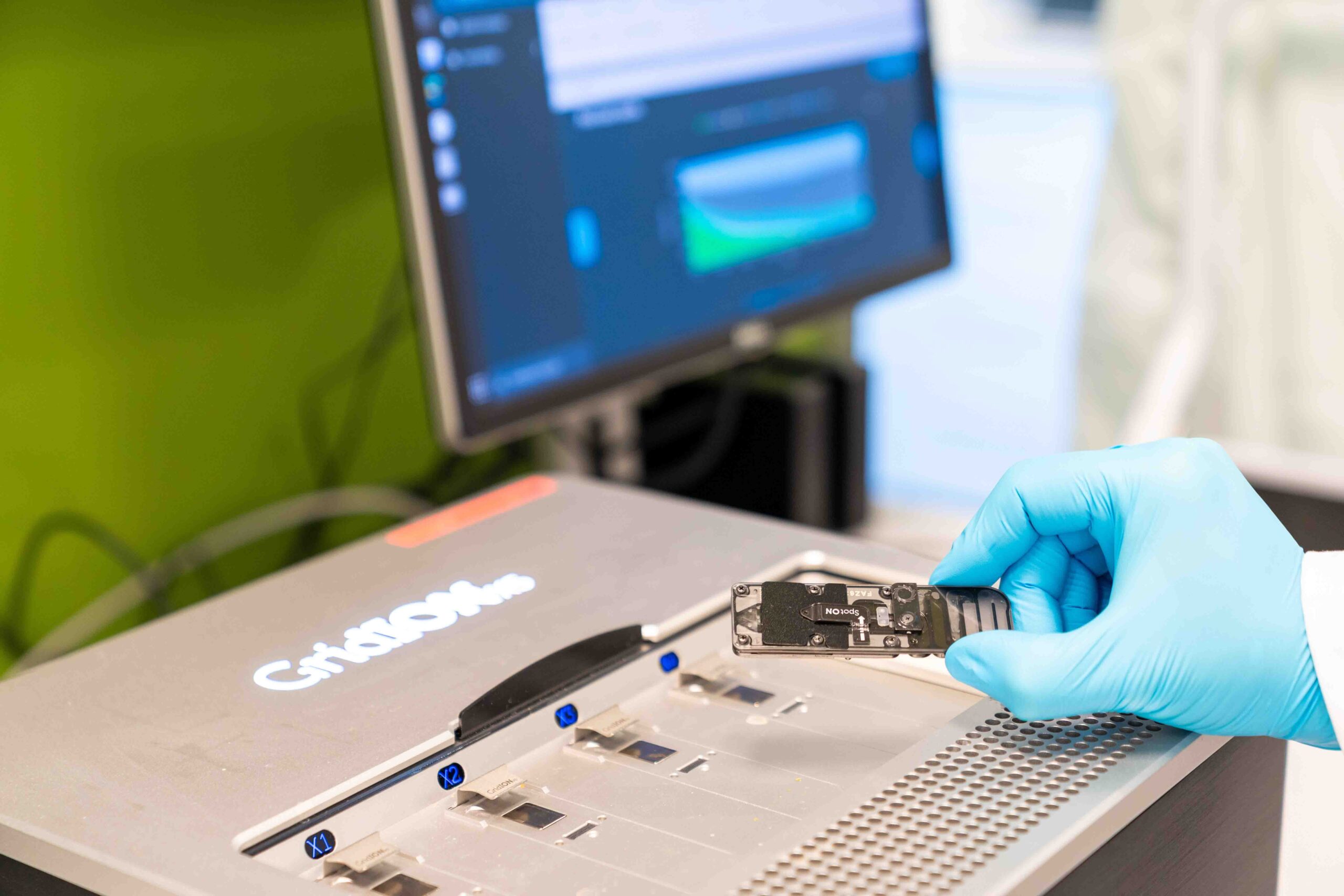
Steven: During my PhD, I focused heavily on ribosome profiling and its interaction with mass spectrometry-based proteomics. From there, we also introduced Oxford Nanopore sequencing. Those two sequencing technologies, ribosome profiling and Oxford Nanopore, were definitely the most prominent in shaping my academic career before I joined OHMX.bio.

Joannes: When a partner wants their data analyzed, how does a typical project unfold step-by-step?

Steven: It depends on the scope of the work. For projects that include a wet lab phase upfront, we coordinate closely with our wet lab technicians and project managers to understand how the experimental phase went and gather necessary background data.

For dry lab-only projects, we interact directly with the partner right from the start to understand the origin of the samples, the data, and the broader research context. In any scenario, we invest a lot of time in communication, discussing results, presenting data, and explaining actionable next steps.

Joannes: How long does a typical bioinformatics trajectory take, and what influences the turnaround time?

Steven: It varies quite a bit. For standard, well-planned pipelines, the turnaround can be as quick as a few days. However, projects that require significant custom work, adapted workflows, and close communication to meet highly specific research needs, can span across multiple weeks.

Joannes: What types of data do you most frequently analyze, and what are the most common analyses requested?

Steven: As a company with deep roots in sequencing, we frequently handle genomic data (both short- and long-read), as well as RNA-Seq and ribosome profiling data. We are also increasingly working with proteomics mass spectrometry data and now also often combine both into a multi-omics strategy.

When it comes to common analysis requests, we often perform differential analysis to determine the effect of a specific treatment or condition across a full transcriptome, translatome, or proteome. We also frequently perform variant calling to identify structural variants or small nucleotide polymorphisms, as well as methylation profiling to pick up and analyze methylation patterns. Ultimately, if a collaborator needs a custom analysis, we will find a solution for it.

Joannes: Do you ever combine multi-omics data with clinical metadata, for instance, for biomarker discovery?

Steven: Yes, absolutely. Biomarkers can be identified across the transcriptome, translatome, or proteome. It is incredibly valuable to compare our findings with existing biomarkers and link them to available clinical metadata to identify meaningful correlations.

Joannes: Let’s talk about AI. What are the biggest challenges in processing large omics datasets, and how does AI fit into that?

Steven: The biggest challenge isn’t just having massive amounts of data; it’s figuring out what to do with it and extracting the most useful insights. AI can definitely help filter and contextualize this information.

However, AI can still make errors. You absolutely need a trained bioinformatician to verify the output, provide a layer of control, and steer the overall process. AI isn’t just for massive datasets, either. Even with smaller datasets, like count data, AI can help identify up- or down-regulated pathways and build a broader picture by crawling public repositories for comparable conditions.

Joannes: So, you wouldn’t agree that bioinformaticians will be replaced by AI in five years?

Steven: I would not agree with that. AI is already helping bioinformaticians, and that will continue. But there will still be plenty of work for bioinformaticians to drive the analysis and work with the AI.

Joannes: What advice or tips do you have for partners when it comes to generating and handling their data?

Steven: First, partners often underestimate data size. At the end of a project, we deliver a massive amount of data, so you need to be prepared to handle it.

Second, always think upfront about what you want to achieve with the results. Consider your experimental design and ensure you have the right number of replicates for valid statistics. Having a solid foundation is the best way to successfully tackle your research question. We are always happy to consult with collaborators upfront to set the project up for the highest chance of success.

Joannes: Given the volume of data, how can partners optimize data storage on their end?

Steven: Think about storage solutions early on. You can use local hard drives, but virtual cloud platforms like Google Cloud or AWS are highly effective. We frequently assist our collaborators in determining the most financially viable option based on how long they plan to store the data and who they intend to share it with.

Joannes: With constant advancements in the field, how do you see multi-omics evolving in the coming years?

Steven: The real acceleration of multi-omics research is happening right now. We’ve seen significant independent evolutions in proteomics and transcriptomics over the last few years, but now the focus is heavily on combining them. The next few years will be incredibly exciting. It’s a field where OHMX.bio is investing a lot of internal research to stay at the forefront of this multi-omics wave.

Joannes: What is the most satisfying part of your role?

Steven: Solving puzzles. We often receive highly specific, custom questions from partners that require days of deep thought, and sometimes I need to sleep a few nights on it to come up with a fitting solution. However, when in the end, a completely new, optimized custom method tackles the unique problem, it is incredibly rewarding.

Joannes: Finally, if there were one task in your job that you wish AI could completely take over, what would it be?

Steven: Definitely the routine or more tedious tasks. Having AI fully handle things like fixing code bugs or executing standard, routine pipelines would be a great use of the technology!

Joannes: Thank you very much for this interview, Steven.

Steven: It was a pleasure

Search all posts

Popular news & events

Tags

Do you have questions about bioinformatics or multi-omics?

Fill out the form below and our experts will get back to you as soon as possible!

Search all posts

Popular news & events

Tags

Your Partner for Innovative OMICS Solutions
Privacy Overview

This website uses cookies so that we can provide you with the best user experience possible. Cookie information is stored in your browser and performs functions such as recognising you when you return to our website and helping our team to understand which sections of the website you find most interesting and useful.

Cookie statement

Last updated:  19-09-2024

This cookie statement is drafted and managed by OHMX.bio NV,

hereafter referred to as “OHMX.bio”.

OHMX.bio has its headquarters at Proeftuinstraat 86, 9000 Gent, Belgium, registered with company number XXX.

For all questions and/or remarks, please contact us at the address mentioned above or at the e-mail address privacy@ohmx.bio.

USE OF COOKIES


OHMX.bio considers it important that you can view, listen to, read or experience our website content at any place and at any time via various media platforms. We want you to be able to use interactive features and provide services tailored to your needs. Therefore OHMX.BIO uses online techniques like cookies, scripts and similar technologies (hereafter referred to as ‘cookies’). These help us facilitate the use of the website and improve its functionality, by collecting (personal) data of our website visitors via their website usage.


In this cookie statement, OHMX.bio wishes to inform you what kind of cookies are used and why.

OHMX.bio can amend the cookie statement at any time. This can happen, for example, in the context of changes to its services or the applicable legislation. The amended statement will then be published on the OHMX.bio websites and will apply from the moment it is published.


If the use of certain cookies also involves the processing of “personal data”, the OHMX.bio Privacy Statement is also applicable.


WHAT ARE COOKIES?


A cookie is a small data file that is installed in the browser of your computer or mobile device by a website's server or application when you visit a website or use a (mobile) application.

The cookie file contains a unique code with which your browser can be recognized during the visit to the online service or during consecutive, repeated visits. They generally make the interaction between the visitor and the website or application easier and faster and help the visitor to navigate between the different parts of a website or application. They allow us to retain certain settings, such as your language choice or to optimize your user experience.


There are different types of cookies that can be distinguished according to their origin, function and lifespan. This is explained further in the next section.

TYPES OF COOKIES

How long are cookies stored?

Cookies can be stored on your computer or mobile device for different periods of time. Depending on the type, they (and the information they collect) are automatically deleted when you close your browser (these are the so-called “session cookies”), in other cases, these remain stored for a longer period of time and can also be used during a subsequent visit to this website (these are the so-called “permanent cookies”).

Consult the detailed information on OHMX.bio cookies (below) to know the retention periods.

Who places and manages cookies?

First-party cookies

First-party cookies are managed by OHMX.bio and are specific to the visited or used online service.

Third party cookies

Third party cookies are managed and placed by a third party. This happens during your visit or use of the website. These ensure that certain information is sent to third parties by your visit to the website.

Why cookies?

Necessary cookies

Necessary or essential cookies are necessary for the operation of the website. It is therefore advised not to disable these.

Functional cookies

These are cookies that ensure that the website functions properly. Examples of some functions performed:

- remembering your login details

- ensuring the security of your login details

- ensuring the uniformity of the layout of the website

Performance and analysis cookies

On the basis of these cookies, information is collected about the way visitors use our website. This is done with the intention to improve the content of our websites, to further adapt it to the wishes of the visitors and to increase the usability of our websites. Like for example google analytics.

Social media cookies

The website can implement so-called embedded elements of other third parties, such as YouTube, Twitter and Facebook. These are used to integrate social media into the website via plug-ins.

Other cookies

These are cookies that do not belong to one of the above categories. For example, cookies that can be used to make web analyzes themselves to optimize the website. In addition to the above-mentioned performance and analysis cookies, other web analysis cookies can be used. These will probably have to be disabled because identifiable personal data may be processed here. This is not the case with the mentioned performance analysis cookies.

OHMX.bio  uses different types of cookies.


Cookie Description Duration Type
cookielawinfo-checkbox-necessary This cookie is set by GDPR Cookie Consent plugin. The cookies is used to store the user consent for the cookies in the category "Necessary". 1 hour Necessary
__utma This cookie is set by Google Analytics and is used to distinguish users and sessions. The cookie is created when the JavaScript library executes and there are no existing __utma cookies. The cookie is updated every time data is sent to Google Analytics. 2 years Performance
__utmc The cookie is set by Google Analytics and is deleted when the user closes the browser. The cookie is not used by ga.js. The cookie is used to enable interoperability with urchin.js which is an older version of Google analytics and used in conjunction with the __utmb cookie to determine new sessions/visits. Performance
__utmz This cookie is set by Google analytics and is used to store the traffic source or campaign through which the visitor reached your site. 5 months Performance
__utmt The cookie is set by Google Analytics and is used to throttle request rate. 10 minutes Performance
__utmb The cookie is set by Google Analytics. The cookie is used to determine new sessions/visits. The cookie is created when the JavaScript library executes and there are no existing __utma cookies. The cookie is updated every time data is sent to Google Analytics. 30 minutes Performance


HOW CAN YOU TURN OFF COOKIES?


If you choose to disable cookies, you can do so for the browser you use:


If you use different devices to visit this website, make sure that your cookie preferences are set on the browser of every device.


Please note that disabling certain cookies may result in the malfunction of related features on the website e.g. certain graphics may not show the way they are meant to, or you may not be able to use certain services.

CHANGES TO THIS COOKIE STATEMENT

OHMX.BIO may amend this Cookie Statement in accordance with certain technical, legal or commercial requirements and developments. We will inform you accordingly, taking into account the importance of the changes that have been made. You may find the date on which this Cookie Statement was last modified at the top of this Cookie Statement.