Ribo-seq: discover which mRNA gets translated

Most of our current knowledge about gene regulation is based on studying mRNA expression, despite both the greater functional importance of protein abundance and evidence that post-transcriptional regulation is pervasive. Ribosome profiling is a high throughput technique that allows to measure translation of mRNA. In this way, measuring protein synthesis closes the gap to measuring protein abundance, routinely done with MS-based proteomics methods. Ribosome profiling allows to reveal translated regions, quantify protein synthesis and resolves ribosome footprints towards translation initiation, elongation and/or stalling.

What is RIBO-seq (Ribosome Profiling)?

RIBO-seq, also known as ribosome profiling or ribosome sequencing, is a specialized sequencing technique used to study the translation of mRNA into proteins. It provides a snapshot of the actively translated regions of the transcriptome by capturing the positions of ribosomes on mRNA molecules. RIBO-seq allows researchers to gain insights into the dynamics of translation, ribosome occupancy, and translational regulation at a genome-wide scale.
The RIBO-seq workflow involves the following steps:

1. Sample Preparation

Cells or tissues are treated with a translation inhibitor, such as cycloheximide, or immediately snap frozen, to freeze the ribosomes in their positions on the mRNA molecules. This ensures the capture of ribosome-protected fragments (RPFs) that represent the regions being actively translated.

2. Ribosome Capture and RNA Extraction

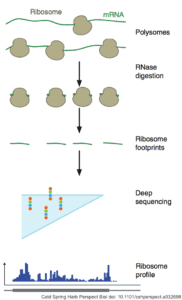
The cells or tissues are lysed, and the lysate is treated with RNase enzymes to digest unprotected RNA fragments. Ribosomes and their associated mRNA fragments (RPFs) are isolated using techniques like sucrose gradient centrifugation or ribosome immunoprecipitation.

3. Library Preparation

The isolated RPFs are converted into a sequencing library by adding adapters to their ends. This involves steps such as reverse transcription, adapter ligation, and PCR amplification.

4. Sequencing

The prepared RIBO-seq library is sequenced using next-generation sequencing (NGS) platforms. The sequencing generates short reads representing the RPFs derived from the ribosome-bound mRNA fragments.

5. Data Analysis

The RIBO-seq data analysis involves aligning the sequenced reads to a reference genome or transcriptome to determine their origin and mapping positions. The read distribution and density along mRNA molecules indicate the regions undergoing active translation. Additional bioinformatics analyses, such as quantification of translation efficiency, identification of translation initiation sites, and analysis of ribosome dynamics, can be performed to extract biological insights.
Significance of RIBO-seq:

1. Translational Regulation

RIBO-seq provides information about ribosome occupancy on mRNA molecules, allowing the identification of translationally active regions and differentially translated genes. It helps uncover translational regulatory mechanisms influencing protein synthesis and post-transcriptional gene regulation.

2. Translation Initiation Sites

RIBO-seq enables the identification of translation initiation sites, providing insights into the precise locations where ribosomes begin protein synthesis. This information aids in the characterization of alternative translation initiation events, upstream open reading frames (uORFs), and the impact of sequence features on translation initiation efficiency.

3. Translational Dynamics and Efficiency

By comparing RIBO-seq data with corresponding mRNA-seq data, researchers can analyze translation efficiency, ribosome pausing, and ribosome release rates. This allows the study of translational kinetics, co-translational protein folding, and the impact of regulatory elements on translation dynamics.

4. Translational Regulation in Disease

RIBO-seq has applications in understanding translational dysregulation in various diseases, including cancer, neurodegenerative disorders, and viral infections. It helps uncover alterations in translation patterns, identify disease-specific translational signatures, and explore therapeutic targets related to translation control. RIBO-seq provides a valuable tool for investigating the translation process and deciphering the complexities of gene regulation at the protein synthesis level. It offers insights into the spatial and temporal aspects of translation, expanding our understanding of gene expression and its regulation in health and disease.

What are the advantages of ribosome profiling?

Study Translational Control

Ribosome profiling allows researchers to investigate how gene expression is regulated at the translational level. It provides information about the positions of ribosomes along mRNA molecules, revealing regions undergoing active translation. By comparing ribosome occupancy between different conditions or cell types, researchers can identify genes and pathways subject to translational control.

Uncover Translational Regulation Mechanisms

Ribosome profiling helps uncover the mechanisms underlying translational regulation. It provides information about translation initiation sites, ribosome pausing, and ribosome release rates. These data can shed light on cis-regulatory elements, trans-acting factors, and RNA structures that influence translation efficiency and dynamics.

Assess Translational Efficiency

Ribosome profiling enables the quantification of translation efficiency by comparing ribosome footprint densities with mRNA expression levels. It provides insights into the relationship between mRNA abundance and the number of ribosomes engaged in translation. This information is essential for understanding the efficiency of protein synthesis and identifying factors that modulate translation rates.

Identify Translational Start Sites and Alternative Reading Frames

Ribosome profiling data can be used to accurately determine translation start sites, which are crucial for accurate annotation of protein-coding genes. Additionally, it helps identify alternative reading frames and upstream open reading frames (uORFs) that play a role in translational regulation, protein isoform diversity, and cellular stress responses.

Study Codon Usage and Translation Efficiency

Ribosome profiling data allows researchers to investigate codon usage biases and their impact on translation efficiency. By analyzing ribosome occupancy patterns at different codons, researchers can gain insights into codon preferences, ribosome stalling, and the effects of codon usage on protein production and folding.

Investigate Translational Regulation in Disease

Ribosome profiling has significant applications in understanding translational dysregulation in various diseases. It helps identify altered translation patterns, uncover disease-specific translational signatures, and explore the impact of mutations or genetic variations on translation efficiency. Such insights can contribute to understanding disease mechanisms and discovering potential therapeutic targets.

Integration with Other Omics Data

Ribosome profiling data can be integrated with other omics data, such as RNA-seq and proteomics, to gain a comprehensive understanding of gene expression regulation. This integration enables researchers to examine the relationships between transcriptional activity, translational efficiency, and protein abundance, providing a more holistic view of cellular processes. Ribosome profiling provides a unique and powerful approach to investigate translational control and unravel the intricacies of gene expression regulation. It offers insights into the dynamics of protein synthesis, translational regulatory mechanisms, and their relevance in normal cellular processes and disease conditions.

Ribosome profiling workflow

Ribosome profiling relies on deep sequencing of ribosome footprints—these short (typically, ∼30 nucleotides) fragments of mRNA that are physically enclosed by the ribosome and shielded from nuclease digestion. These footprints are converted into a library of DNA fragments and analyzed by one of our Illumina sequencers. The technical quality of the sequencing run is monitored in real-time. Each sequenced footprint reports on the position of one ribosome, revealing what transcript that ribosome was translating and where along the coding sequence it was captured during cell lysis, often with single-nucleotide resolution. Current deep-sequencing technologies analyze hundreds of millions of individual short reads in one experiment. When applied to libraries of ribosome footprints, this sequencing yields a comprehensive view of the translational landscape that can address many fundamental questions about translations. Several specific antibiotic treatments during sample preparation result in genome-wide maps of elongating and initiating ribosomes to help delineate the ORF by also capturing the translation initiation events.
We request between 25 – 50 million cells per sample and provide a flash-frozen cell pellet. We perform cell lysis ourselves.
Raw sequencing data can be transferred to you via the OHMX.bio server (sFTP download).

What is the difference between RNA-seq and RIBO-seq?

RNA-seq and RIBO-seq are two distinct sequencing techniques used in molecular biology to study different aspects of RNA molecules. Here’s a breakdown of the differences between the two:

RNA-seq (RNA sequencing):

Purpose: RNA-seq is primarily used to measure the abundance and identify the different types of RNA molecules present in a sample.
Focus: It provides a comprehensive snapshot of the transcriptome, including all types of RNA such as messenger RNA (mRNA), non-coding RNA, and small RNA molecules.
Methodology: RNA-seq involves isolating and sequencing the entire population of RNA molecules present in a sample, followed by computational analysis to determine the sequence and quantity of RNA molecules.
Key applications: Gene expression analysis, identification of novel transcripts, alternative splicing analysis, transcriptome profiling, differential gene expression analysis, etc.

RIBO-seq (ribosome profiling sequencing):

Purpose: RIBO-seq is specifically designed to study the activity of ribosomes on mRNA molecules, providing insights into translation dynamics and protein synthesis.
Focus: It captures the ribosome-protected fragments (RPFs) of mRNA molecules, which represent the positions where ribosomes are actively translating.
Methodology: RIBO-seq involves treating cells or tissues with ribosome-stalling drugs, followed by nuclease digestion to isolate ribosome-protected mRNA fragments. These fragments are then subjected to sequencing and subsequent analysis to determine ribosome occupancy and translation efficiency.
Key applications: Identification of translated ORFs (open reading frames), characterization of translated regions, quantification of translation efficiency, investigation of translational regulation, ribosome profiling of specific cell types or conditions, etc.
In summary, RNA-seq provides a global overview of RNA molecules present in a sample, whereas RIBO-seq specifically focuses on the ribosome-associated mRNA fragments, enabling the study of translation and protein synthesis.

How can RIBO-seq help to explain drug mode-of-action (MOA)?

RIBO-seq, or ribosome profiling sequencing, can provide valuable insights into drug mechanisms of action (MOA) by examining how drugs affect translation dynamics and protein synthesis. Here are a few ways in which RIBO-seq can contribute to understanding drug MOA:

Identifying direct targets

RIBO-seq can help identify the specific mRNA targets that are affected by a drug. By comparing RIBO-seq profiles of treated and untreated cells, researchers can determine which mRNA molecules show altered ribosome occupancy or translation efficiency upon drug treatment. These differentially regulated transcripts may represent direct targets of the drug.

Uncovering off-target effects

RIBO-seq can reveal unintended off-target effects of drugs. By analyzing RIBO-seq data from cells treated with different drugs, researchers can identify transcripts that exhibit altered translation profiles common to multiple drugs. This analysis can help identify potential off-target effects or shared targets among different drugs.

Characterizing translational regulation

RIBO-seq provides information about translation dynamics, such as translation initiation and elongation rates. By comparing RIBO-seq profiles between drug-treated and control samples, researchers can gain insights into how a drug affects translation regulation. Changes in ribosome occupancy patterns or translation efficiency can indicate alterations in specific steps of translation, providing clues about the drug’s MOA.

Assessing drug-induced stress responses

Some drugs can induce cellular stress responses, affecting translation and protein synthesis. RIBO-seq can help characterize these stress responses by analyzing changes in ribosome occupancy and translation efficiency in response to drug treatment. This information can shed light on how drugs impact cellular processes and signaling pathways.

Predicting drug targets and pathways

Integrating RIBO-seq data with other omics data, such as transcriptomics and proteomics, can provide a comprehensive view of drug effects. By correlating changes in ribosome occupancy with changes in gene expression or protein abundance, researchers can identify drug targets, affected pathways, and potential downstream effects. Overall, RIBO-seq can offer a mechanistic understanding of drug effects at the translational level, aiding in the identification of drug targets, off-target effects, stress responses, and alterations in cellular processes. This knowledge can contribute to a better understanding of drug MOA and facilitate the development of more effective therapeutic interventions.

How can Ribosome Profiling help to discover disease targets?

RIBO-seq, or ribosome profiling sequencing, can contribute to the discovery of disease targets by providing insights into dysregulated translation and identifying disease-associated changes in protein synthesis. Here are some ways RIBO-seq can help in the discovery of disease targets:

Identification of disease-associated transcripts

RIBO-seq can identify specific mRNA transcripts that show altered ribosome occupancy or translation efficiency in disease conditions compared to healthy controls. By comparing RIBO-seq profiles between diseased and healthy samples, researchers can identify transcripts that are differentially translated in the disease state. These dysregulated transcripts may represent potential disease targets.

Characterization of disease-specific translation signatures

RIBO-seq can reveal disease-specific translation signatures by analyzing changes in ribosome occupancy patterns and translation dynamics. By comparing RIBO-seq data from different disease states, researchers can identify commonalities and differences in translation profiles. These disease-specific translation signatures can help uncover key regulatory pathways and potential therapeutic targets.

Identification of disease-associated alternative translation events

RIBO-seq can detect alternative translation events, such as upstream open reading frames (uORFs) and alternative translation initiation sites. Dysregulation of such events has been implicated in various diseases. RIBO-seq can provide information on the translation patterns of these alternative events, aiding in the identification of disease-associated translation alterations and potential therapeutic targets.

Mapping disease-associated mutations affecting translation

RIBO-seq can be used to map the effects of disease-associated mutations on translation. By integrating RIBO-seq data with genomic information, researchers can identify mutations that disrupt translation initiation, elongation, or termination. Understanding the impact of these mutations on protein synthesis can help identify disease targets and pathways affected by the mutations.

Integrating RIBO-seq with other omics data

Integrating RIBO-seq data with other omics data, such as transcriptomics, proteomics, and genomics, can provide a comprehensive view of disease-related molecular changes. By correlating changes in ribosome occupancy with changes in gene expression, protein abundance, and genomic alterations, researchers can uncover disease targets, affected pathways, and potential therapeutic interventions. Overall, RIBO-seq enables the identification of dysregulated translation events, disease-specific translation signatures, and disease-associated targets, providing valuable insights into the molecular mechanisms underlying diseases. This information can guide the development of targeted therapies and interventions for various diseases.

How can RIBO-seq help in the field of immune therapy?

RIBO-seq can contribute to the field of immune therapy by providing insights into immune cell activation, immune response regulation, and the identification of potential therapeutic targets. Here are several ways RIBO-seq can be beneficial in the context of immune therapy:

Characterizing immune cell activation

RIBO-seq can help characterize the translational changes occurring during immune cell activation. By profiling ribosome occupancy in immune cells before and after activation, researchers can identify genes and pathways that are translationally upregulated or downregulated. This information can provide a deeper understanding of the molecular events driving immune cell activation and guide the development of targeted therapies.

Identifying immune response regulators

RIBO-seq can aid in the discovery of key regulators of immune responses. By comparing RIBO-seq profiles between different immune cell types or states, researchers can identify differentially translated genes and pathways associated with immune regulation. These findings can uncover potential targets for modulating immune responses, leading to the development of novel immunotherapies.

Investigating immune cell heterogeneity

RIBO-seq can be used to study the translational profiles of specific immune cell subsets or rare cell populations. By isolating and profiling ribosome-protected mRNA fragments from specific cell types, researchers can gain insights into the translational landscape of distinct immune cell populations. This information can help understand the functional differences between immune cell subsets and guide the development of cell-specific therapies.

Identifying immune-related drug targets

RIBO-seq can aid in the identification of potential therapeutic targets for immune-related diseases or conditions. By analyzing ribosome occupancy and translation efficiency in immune cells under different treatment conditions, researchers can identify genes and pathways that are translationally modulated by immune-related drugs or therapies. These targets can be further explored for therapeutic interventions.

Personalizing immune therapy

RIBO-seq can contribute to precision medicine approaches in immune therapy. By profiling ribosome occupancy in patient samples, researchers can identify patient-specific translational profiles and biomarkers associated with therapeutic response or resistance. This information can guide the selection of appropriate immune therapies and aid in treatment decision-making. Overall, RIBO-seq can provide valuable insights into immune cell activation, immune response regulation, and the identification of therapeutic targets in the field of immune therapy. These findings can contribute to the development of novel immunotherapies and personalized treatment strategies.

Ribosome Profiling services with OHMX.bio?

At OHMX.bio, we take pride in offering state-of-the-art Ribosome Profiling (RIBO-seq) services. With over 50 RIBO-seq-related projects and more than 20 publications spanning various fields and applications, our protocols and pipelines have been optimally designed to cater to your specific needs, ensuring precise results and comprehensive insights. Feel free to reach out to our team with any inquiries or to discuss potential collaborations. Together, we can unlock the full potential of Nanopore sequencing and drive scientific advancements that benefit us all.

What do our customers say

“Thanks to the services of OHMX.bio, we were able to generate super high quality Ribo-seq data, which we would not have been able to generate ourselves.”
Kim De Keersmaecker

Relevant papers on the ribosome profiling technology from the OHMX.bio team:

Search all posts

Popular news & events

Tags

Do you have questions about ribosome profiling?

Fill out the form below and our experts will get back to you as soon as possible!

Search all posts

Popular news & events

Tags

Your Partner for Innovative OMICS Solutions
Privacy Overview

This website uses cookies so that we can provide you with the best user experience possible. Cookie information is stored in your browser and performs functions such as recognising you when you return to our website and helping our team to understand which sections of the website you find most interesting and useful.

Cookie statement

Last updated:  19-09-2024

This cookie statement is drafted and managed by OHMX.bio NV,

hereafter referred to as “OHMX.bio”.

OHMX.bio has its headquarters at Proeftuinstraat 86, 9000 Gent, Belgium, registered with company number XXX.

For all questions and/or remarks, please contact us at the address mentioned above or at the e-mail address privacy@ohmx.bio.

USE OF COOKIES


OHMX.bio considers it important that you can view, listen to, read or experience our website content at any place and at any time via various media platforms. We want you to be able to use interactive features and provide services tailored to your needs. Therefore OHMX.BIO uses online techniques like cookies, scripts and similar technologies (hereafter referred to as ‘cookies’). These help us facilitate the use of the website and improve its functionality, by collecting (personal) data of our website visitors via their website usage.


In this cookie statement, OHMX.bio wishes to inform you what kind of cookies are used and why.

OHMX.bio can amend the cookie statement at any time. This can happen, for example, in the context of changes to its services or the applicable legislation. The amended statement will then be published on the OHMX.bio websites and will apply from the moment it is published.


If the use of certain cookies also involves the processing of “personal data”, the OHMX.bio Privacy Statement is also applicable.


WHAT ARE COOKIES?


A cookie is a small data file that is installed in the browser of your computer or mobile device by a website's server or application when you visit a website or use a (mobile) application.

The cookie file contains a unique code with which your browser can be recognized during the visit to the online service or during consecutive, repeated visits. They generally make the interaction between the visitor and the website or application easier and faster and help the visitor to navigate between the different parts of a website or application. They allow us to retain certain settings, such as your language choice or to optimize your user experience.


There are different types of cookies that can be distinguished according to their origin, function and lifespan. This is explained further in the next section.

TYPES OF COOKIES

How long are cookies stored?

Cookies can be stored on your computer or mobile device for different periods of time. Depending on the type, they (and the information they collect) are automatically deleted when you close your browser (these are the so-called “session cookies”), in other cases, these remain stored for a longer period of time and can also be used during a subsequent visit to this website (these are the so-called “permanent cookies”).

Consult the detailed information on OHMX.bio cookies (below) to know the retention periods.

Who places and manages cookies?

First-party cookies

First-party cookies are managed by OHMX.bio and are specific to the visited or used online service.

Third party cookies

Third party cookies are managed and placed by a third party. This happens during your visit or use of the website. These ensure that certain information is sent to third parties by your visit to the website.

Why cookies?

Necessary cookies

Necessary or essential cookies are necessary for the operation of the website. It is therefore advised not to disable these.

Functional cookies

These are cookies that ensure that the website functions properly. Examples of some functions performed:

- remembering your login details

- ensuring the security of your login details

- ensuring the uniformity of the layout of the website

Performance and analysis cookies

On the basis of these cookies, information is collected about the way visitors use our website. This is done with the intention to improve the content of our websites, to further adapt it to the wishes of the visitors and to increase the usability of our websites. Like for example google analytics.

Social media cookies

The website can implement so-called embedded elements of other third parties, such as YouTube, Twitter and Facebook. These are used to integrate social media into the website via plug-ins.

Other cookies

These are cookies that do not belong to one of the above categories. For example, cookies that can be used to make web analyzes themselves to optimize the website. In addition to the above-mentioned performance and analysis cookies, other web analysis cookies can be used. These will probably have to be disabled because identifiable personal data may be processed here. This is not the case with the mentioned performance analysis cookies.

OHMX.bio  uses different types of cookies.


Cookie Description Duration Type
cookielawinfo-checkbox-necessary This cookie is set by GDPR Cookie Consent plugin. The cookies is used to store the user consent for the cookies in the category "Necessary". 1 hour Necessary
__utma This cookie is set by Google Analytics and is used to distinguish users and sessions. The cookie is created when the JavaScript library executes and there are no existing __utma cookies. The cookie is updated every time data is sent to Google Analytics. 2 years Performance
__utmc The cookie is set by Google Analytics and is deleted when the user closes the browser. The cookie is not used by ga.js. The cookie is used to enable interoperability with urchin.js which is an older version of Google analytics and used in conjunction with the __utmb cookie to determine new sessions/visits. Performance
__utmz This cookie is set by Google analytics and is used to store the traffic source or campaign through which the visitor reached your site. 5 months Performance
__utmt The cookie is set by Google Analytics and is used to throttle request rate. 10 minutes Performance
__utmb The cookie is set by Google Analytics. The cookie is used to determine new sessions/visits. The cookie is created when the JavaScript library executes and there are no existing __utma cookies. The cookie is updated every time data is sent to Google Analytics. 30 minutes Performance


HOW CAN YOU TURN OFF COOKIES?


If you choose to disable cookies, you can do so for the browser you use:


If you use different devices to visit this website, make sure that your cookie preferences are set on the browser of every device.


Please note that disabling certain cookies may result in the malfunction of related features on the website e.g. certain graphics may not show the way they are meant to, or you may not be able to use certain services.

CHANGES TO THIS COOKIE STATEMENT

OHMX.BIO may amend this Cookie Statement in accordance with certain technical, legal or commercial requirements and developments. We will inform you accordingly, taking into account the importance of the changes that have been made. You may find the date on which this Cookie Statement was last modified at the top of this Cookie Statement.