OHMX.bio Joins PARIS-BIO: A phase II clinical study using RNA sequencing to predict treatment response in high-risk prostate cancer

High-risk prostate cancer remains one of the most challenging oncological problems in urology. Even after radical prostatectomy, a significant proportion of patients experience disease recurrence, partly driven by micro-metastatic disease that conventional imaging cannot detect. Identifying which patients will respond to neoadjuvant treatment before surgery is a critical unmet need. The PARIS-BIO study is designed to address exactly that.

OHMX.bio is proud to be a collaborator in this clinical research initiative, contributing our RNA sequencing expertise to help validate a genomic biomarker that could change how high-risk prostate cancer patients are selected for treatment.

What is the PARIS-BIO study?

PARIS-BIO (Prostate Androgen Response Investigation Using a Stratification BIOmarker) is a Phase II, single-arm, open-label, non-randomised interventional study led by Region Stockholm and coordinated through Karolinska University Hospital, with Professor Peter N. Wiklund as Principal Investigator. The study is supported by the Innovative Health Initiative of the European Union and conducted in collaboration with Sahlgrenska University Hospital, Philips, Bayer, and OHMX.bio.

The study enrolled 100 patients with biopsy-confirmed high-risk prostate cancer who are candidates for radical prostatectomy. All participants receive Darolutamide, an androgen receptor pathway inhibitor (ARPI), at 600 mg twice daily for 90 to 120 days. MRI imaging will be performed between days 90 and 120 before surgery. Radical prostatectomy is performed within the same window. Darolutamide is already approved for metastatic prostate cancer, but its use in the neoadjuvant setting for localised high-risk disease represents an area of active investigation.

The central scientific question is straightforward: can a pre-treatment genomic biomarker predict which patients will achieve a meaningful pathological response to neoadjuvant Darolutamide?

The PCAI ImmunoScore: a gene expression signature from tumor biopsies

At the heart of the study is the PCAI ImmunoScore, a gene expression signature calculated from RNA sequencing of diagnostic tumor biopsies collected before treatment begins. The score generates a probability value between 0 and 1 that predicts the likelihood of a patient achieving Minimal Residual Disease (MRD) after surgery, defined as less than 0.05 cm³ of residual tumor on final pathology.

The primary analysis will evaluate the association between the pre-treatment PCAI ImmunoScore and MRD using AUROC analysis. Secondary endpoints include pathological complete response, PSA kinetics during treatment, MRI tumor response, and patient-reported outcomes on urinary and erectile function.

The study enrolled 100 patients with biopsy-confirmed high-risk prostate cancer who are candidates for radical prostatectomy. All participants receive Darolutamide, an androgen receptor pathway inhibitor (ARPI), at 600 mg twice daily for 90 to 120 days. MRI imaging will be performed between days 90 and 120 before surgery. Radical prostatectomy is performed within the same window. Darolutamide is already approved for metastatic prostate cancer, but its use in the neoadjuvant setting for localised high-risk disease represents an area of active investigation.

The central scientific question is straightforward: can a pre-treatment genomic biomarker predict which patients will achieve a meaningful pathological response to neoadjuvant Darolutamide?

OHMX.bio's role: RNA, DNA, and methylation in FFPE samples

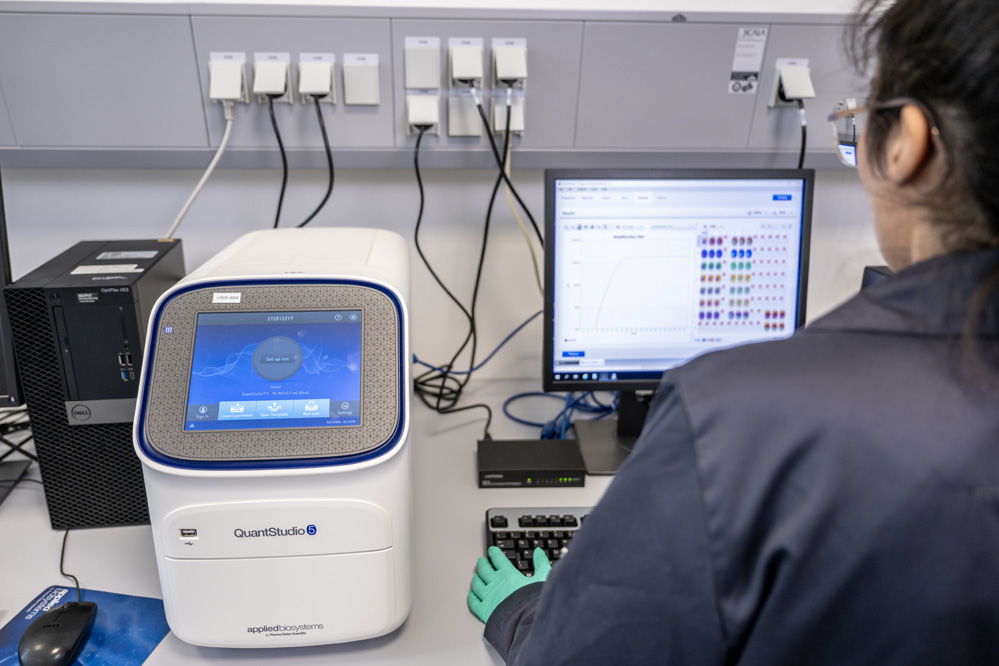
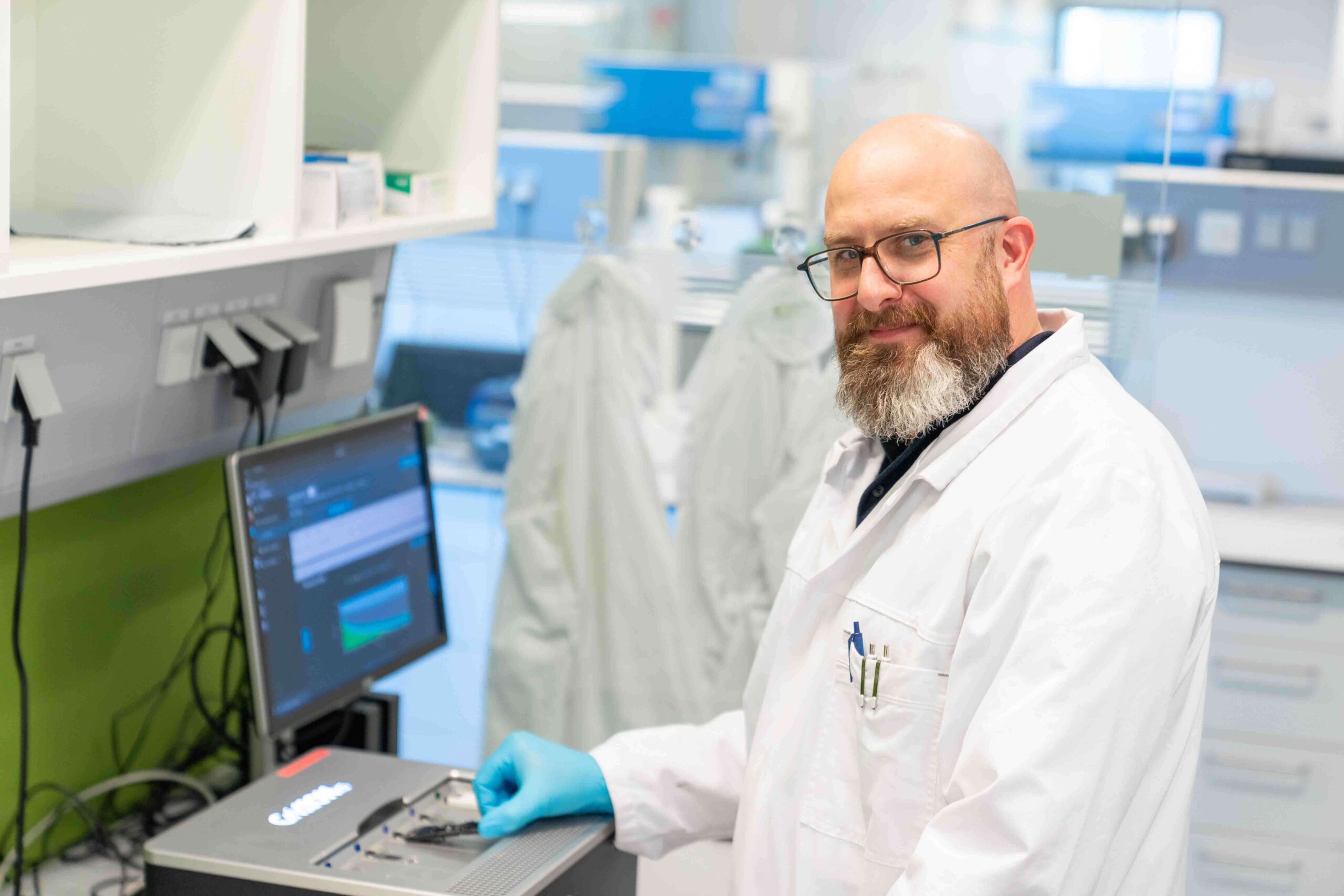
OHMX.bio contributes to the PARIS-BIO study through bulk RNA sequencing of the pre-treatment tumor biopsy samples, as well as testing out novel methods to investigate the genomics and epigenomics of FFPE samples. Once all 100 participants have been enrolled and their biopsies collected, OHMX.bio will perform high-throughput sequencing of the full sample cohort. The resulting transcriptomic data form the basis for calculating the PCAI ImmunoScore for each patient.

This is precisely the type of clinical research application where our end-to-end omics infrastructure adds value: from sample receipt and quality control to sequencing and bioinformatics, under an ISO-certified quality management system aligned with GCLP principles. Working with clinical tumor tissue in a regulated research setting requires both technical precision and robust documentation, and this is what we deliver.

Why this study matters

The broader significance of PARIS-BIO goes beyond Darolutamide. If the PCAI ImmunoScore proves predictive of treatment response in this setting, it opens a path toward RNA sequencing-based companion diagnostics for neoadjuvant therapy in prostate cancer. Rather than treating all high-risk patients uniformly, clinicians could use a pre-treatment biopsy and a genomic score to identify who is most likely to benefit.

This reflects a wider shift in oncology: moving from stage-based treatment decisions toward molecularly informed patient selection. Transcriptomic biomarkers, derived from the same biopsy material already collected for diagnosis, are well-positioned to play a central role in that transition.

The PARIS-BIO study is currently recruiting in Sweden, with primary data collection expected to be completed in June 2027.

Contributing to precision oncology

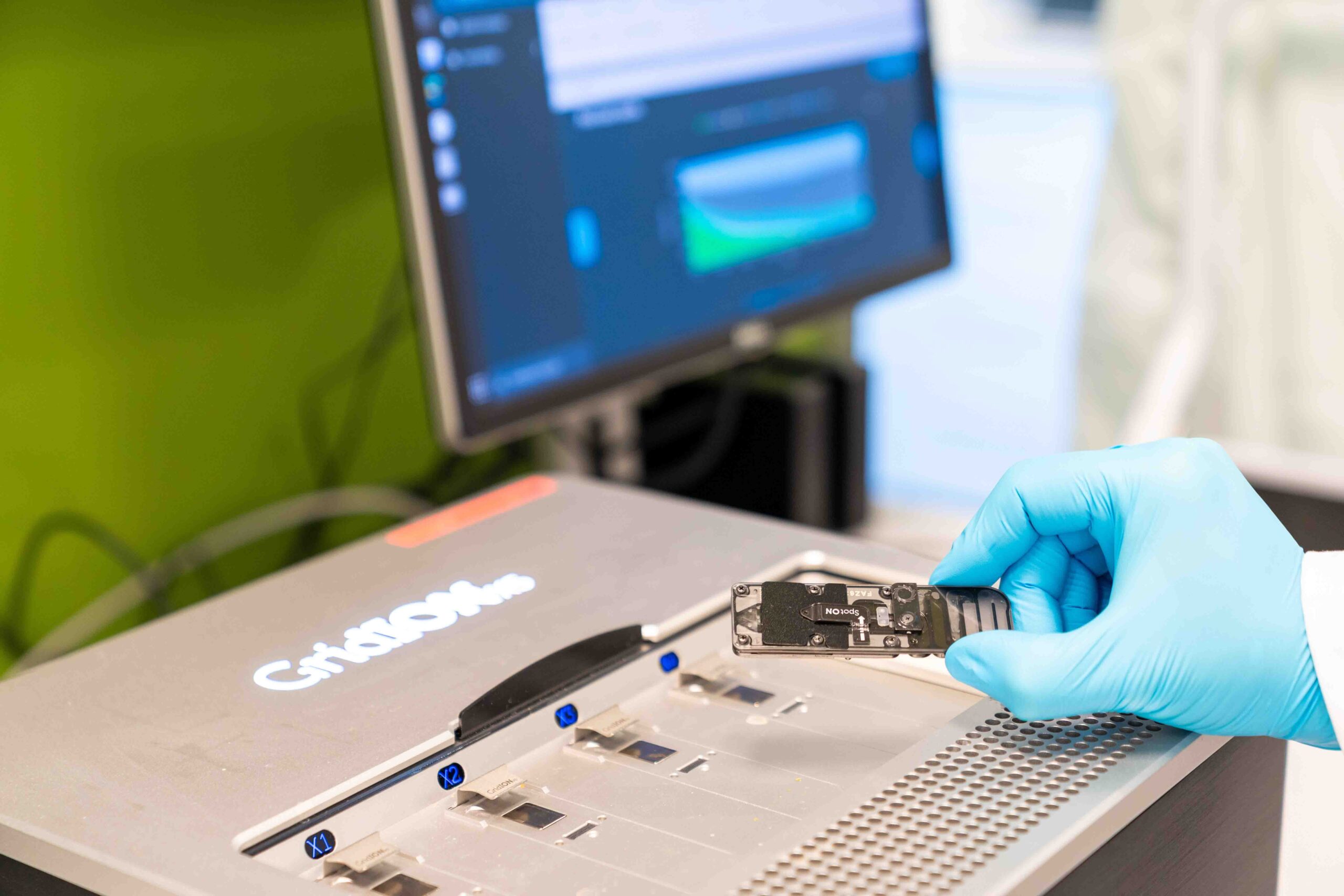
Being part of a clinical study that combines European research infrastructure, pharmaceutical expertise, and cutting-edge genomic profiling is exactly why OHMX.bio exists to support. We are glad to contribute our RNA sequencing capabilities to the PARIS-BIO consortium, and we look forward to seeing how the PCAI ImmunoScore performs across the full patient cohort.

For more information about the PARIS-BIO study, visit https://clinicaltrials.gov/study/NCT07617272.

Search all posts

Popular news & events

Tags

Do you have questions about the PARIS-BIO study?

Fill out the form below and our experts will get back to you as soon as possible!
OHMX..bio logo
Privacy Overview

This website uses cookies so that we can provide you with the best user experience possible. Cookie information is stored in your browser and performs functions such as recognising you when you return to our website and helping our team to understand which sections of the website you find most interesting and useful.

Cookie statement

Last updated:  19-09-2024

This cookie statement is drafted and managed by OHMX.bio NV,

hereafter referred to as “OHMX.bio”.

OHMX.bio has its headquarters at Proeftuinstraat 86, 9000 Gent, Belgium, registered with company number XXX.

For all questions and/or remarks, please contact us at the address mentioned above or at the e-mail address privacy@ohmx.bio.

USE OF COOKIES


OHMX.bio considers it important that you can view, listen to, read or experience our website content at any place and at any time via various media platforms. We want you to be able to use interactive features and provide services tailored to your needs. Therefore OHMX.BIO uses online techniques like cookies, scripts and similar technologies (hereafter referred to as ‘cookies’). These help us facilitate the use of the website and improve its functionality, by collecting (personal) data of our website visitors via their website usage.


In this cookie statement, OHMX.bio wishes to inform you what kind of cookies are used and why.

OHMX.bio can amend the cookie statement at any time. This can happen, for example, in the context of changes to its services or the applicable legislation. The amended statement will then be published on the OHMX.bio websites and will apply from the moment it is published.


If the use of certain cookies also involves the processing of “personal data”, the OHMX.bio Privacy Statement is also applicable.


WHAT ARE COOKIES?


A cookie is a small data file that is installed in the browser of your computer or mobile device by a website's server or application when you visit a website or use a (mobile) application.

The cookie file contains a unique code with which your browser can be recognized during the visit to the online service or during consecutive, repeated visits. They generally make the interaction between the visitor and the website or application easier and faster and help the visitor to navigate between the different parts of a website or application. They allow us to retain certain settings, such as your language choice or to optimize your user experience.


There are different types of cookies that can be distinguished according to their origin, function and lifespan. This is explained further in the next section.

TYPES OF COOKIES

How long are cookies stored?

Cookies can be stored on your computer or mobile device for different periods of time. Depending on the type, they (and the information they collect) are automatically deleted when you close your browser (these are the so-called “session cookies”), in other cases, these remain stored for a longer period of time and can also be used during a subsequent visit to this website (these are the so-called “permanent cookies”).

Consult the detailed information on OHMX.bio cookies (below) to know the retention periods.

Who places and manages cookies?

First-party cookies

First-party cookies are managed by OHMX.bio and are specific to the visited or used online service.

Third party cookies

Third party cookies are managed and placed by a third party. This happens during your visit or use of the website. These ensure that certain information is sent to third parties by your visit to the website.

Why cookies?

Necessary cookies

Necessary or essential cookies are necessary for the operation of the website. It is therefore advised not to disable these.

Functional cookies

These are cookies that ensure that the website functions properly. Examples of some functions performed:

- remembering your login details

- ensuring the security of your login details

- ensuring the uniformity of the layout of the website

Performance and analysis cookies

On the basis of these cookies, information is collected about the way visitors use our website. This is done with the intention to improve the content of our websites, to further adapt it to the wishes of the visitors and to increase the usability of our websites. Like for example google analytics.

Social media cookies

The website can implement so-called embedded elements of other third parties, such as YouTube, Twitter and Facebook. These are used to integrate social media into the website via plug-ins.

Other cookies

These are cookies that do not belong to one of the above categories. For example, cookies that can be used to make web analyzes themselves to optimize the website. In addition to the above-mentioned performance and analysis cookies, other web analysis cookies can be used. These will probably have to be disabled because identifiable personal data may be processed here. This is not the case with the mentioned performance analysis cookies.

OHMX.bio  uses different types of cookies.


Cookie Description Duration Type
cookielawinfo-checkbox-necessary This cookie is set by GDPR Cookie Consent plugin. The cookies is used to store the user consent for the cookies in the category "Necessary". 1 hour Necessary
__utma This cookie is set by Google Analytics and is used to distinguish users and sessions. The cookie is created when the JavaScript library executes and there are no existing __utma cookies. The cookie is updated every time data is sent to Google Analytics. 2 years Performance
__utmc The cookie is set by Google Analytics and is deleted when the user closes the browser. The cookie is not used by ga.js. The cookie is used to enable interoperability with urchin.js which is an older version of Google analytics and used in conjunction with the __utmb cookie to determine new sessions/visits. Performance
__utmz This cookie is set by Google analytics and is used to store the traffic source or campaign through which the visitor reached your site. 5 months Performance
__utmt The cookie is set by Google Analytics and is used to throttle request rate. 10 minutes Performance
__utmb The cookie is set by Google Analytics. The cookie is used to determine new sessions/visits. The cookie is created when the JavaScript library executes and there are no existing __utma cookies. The cookie is updated every time data is sent to Google Analytics. 30 minutes Performance


HOW CAN YOU TURN OFF COOKIES?


If you choose to disable cookies, you can do so for the browser you use:


If you use different devices to visit this website, make sure that your cookie preferences are set on the browser of every device.


Please note that disabling certain cookies may result in the malfunction of related features on the website e.g. certain graphics may not show the way they are meant to, or you may not be able to use certain services.

CHANGES TO THIS COOKIE STATEMENT

OHMX.BIO may amend this Cookie Statement in accordance with certain technical, legal or commercial requirements and developments. We will inform you accordingly, taking into account the importance of the changes that have been made. You may find the date on which this Cookie Statement was last modified at the top of this Cookie Statement.