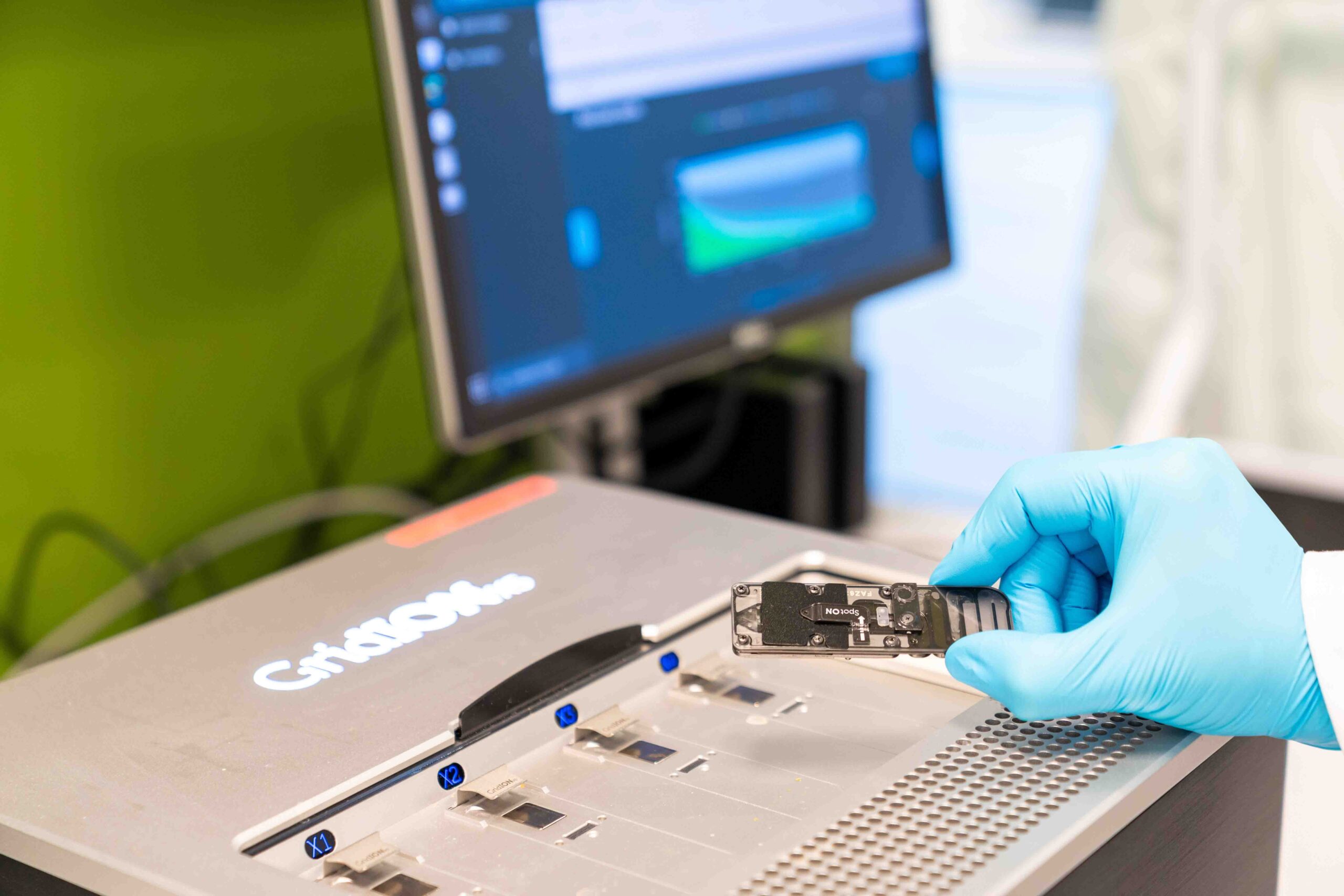
Selecting the right nanopore sequencing service for your research

Over the past decade, sequencing methods have changed how researchers study genome structure, transcript diversity, and complex microbial communities. Within this landscape, nanopore sequencing generates both DNA and RNA sequencing data in real time and produces long reads that can span regions that are difficult to resolve with short-read platforms.

As a result, many research groups now use a nanopore sequencing service for projects that require structural variant detection, full-length transcript analysis, genome assembly, or rapid analysis of time-sensitive samples. Nanopore sequencing also supports analysis of native DNA and RNA, including direct detection of some base modifications, which broadens its utility in functional and regulatory studies.

With the constant growth in new applications, reagents, and kits for nanopore sequencing, the choice of provider has become more important. The main variables are expertise, flexibility with sample types, workflow design, sequencing capacity, turnaround time, and the scope of downstream bioinformatical analysis.

When nanopore sequencing is the right fit

Short-read technologies often fall short in resolving complex genomic regions. A nanopore sequencing service is typically selected when projects require ultra-long read lengths (kilobases to megabases), real-time data generation, and direct sequencing of native DNA or RNA without amplification bias.

One of the main reasons research groups adopt a long-read sequencing strategy is its ability to resolve structurally complex regions. Long reads span repetitive sequences, improving genome assembly and enabling accurate detection of structural variants such as insertions, deletions, inversions, and translocations. This makes nanopore platforms highly effective for de novo assembly and haplotype phasing.

Another key advantage is real-time sequencing and rapid analysis. Data is generated continuously, allowing early insights into experimental outcomes. This is particularly valuable in time-sensitive applications such as pathogen detection, where rapid identification of viral or bacterial genomes is critical. Features like adaptive sampling also enable selective enrichment of target regions without additional wet-lab steps. Furthermore, due to its long reads, nanopore sequencing is ideally suited for either metagenomic sequencing or 16S/18S/23S sequencing of microbial and fungal populations.

Importantly, nanopore technology supports direct sequencing of native DNA and RNA, enabling detection of epigenetic modifications such as DNA methylation without chemical treatment or amplification. It provides additional insight for regulatory and functional genomics studies.

In summary, nanopore sequencing is often chosen for:
  • Genome Assembly: Resolving repetitive regions and generating high-contiguity assemblies
  • Plasmid Sequencing: Complete reconstruction of circular DNA molecules
  • Structural Variant Detection: Identification of large genomic rearrangements
  • RNA / Isoform Analysis: Full-length transcript sequencing and splice variant resolution
  • Microbiome / Metagenomics:  Accurate species identification and community profiling

Common project types and expected outputs

Selecting a nanopore sequencing provider requires aligning your project type with expected outputs, coverage, and success criteria.

1. Genome assembly (de novo sequencing)

Expected deliverables for genome assembly projects can include raw reads in FASTQ format, assembled genomes in FASTA format, and polished consensus sequences. Typical coverage targets range from approximately 30× to 100×, depending on genome size and complexity. Success is generally defined by high-contiguity assemblies with long contigs and strong N50 values, showing that repetitive genomic regions have been resolved effectively compared to short-read approaches.

2. Structural variant (SV) detection

Structural variant detection projects mostly deliver aligned reads in BAM format, structural variant calls in VCF format, and annotated variant reports. Reliable genome-wide SV detection usually requires coverage between 20× and 60×. A successful outcome means accurate identification of major genomic rearrangements such as insertions, deletions, inversions, and translocations, with strong support from long-read alignments and minimal ambiguity.

3. RNA sequencing / Isoform analysis

RNA sequencing and isoform analysis projects generally provide FASTQ files, transcript alignments, isoform annotations, and expression data. Coverage requirements vary depending on transcript abundance and the overall experimental design. Success is measured by the ability to capture full-length transcripts and accurately identify splice variants, reducing the reconstruction errors that are often associated with short-read sequencing methods.

4. Plasmid sequencing

Plasmid sequencing projects usually include FASTQ reads, complete plasmid assemblies, and circular consensus sequences. Because plasmids are small circular DNA molecules, high coverage of more than 100× is recommended to assure accuracy. A successful result is a complete, gap-free plasmid reconstruction with clear structural integrity and minimal sequencing errors.

5. Metagenomics / Microbiome Profiling

Metagenomics and microbiome profiling projects usually generate FASTQ files, taxonomic classification reports, and relative abundance profiles. Coverage needs can vary mostly depending on microbial diversity and sample complexity. Success is defined by accurate species-level identification and the ability to connect functional elements, such as antimicrobial resistance genes, to specific organisms within a complex microbial community.

The provider checklist: What to ask before you start

Ask key questions about sample quality, workflow design, turnaround time, and data delivery before selecting a nanopore sequencing provider.

Sample and extraction requirements (DNA/RNA)

Sample quality is the main determinant of nanopore sequencing performance. For DNA-based workflows, high molecular weight input is especially important because read length reflects fragment length entering the library preparation process. In case the extraction is performed at the client’s side, concentration, purity, and fragment size should be assessed before sending the sample. The current input QC guidance states that DNA should typically show an OD 260/280 ratio near 1.8 and an OD 260/230 ratio of 2.0 to 2.2, with fragment length assessed by methods such as Femto Pulse or pulsed-field gel electrophoresis.

A provider typically specifies the minimum input quantity, acceptable purity range, and the fragment-size profile required for the project. It is equally important to ask what happens when the sample fails these criteria. In most cases, the options are re-extraction, use of an alternative library strategy, or proceeding with the understanding that read N50, yield, and downstream performance may decline.

For RNA projects, integrity must also be addressed explicitly. Lower RNA integrity leads to shorter sequencing reads and reduced ability to recover intact transcript structures. A provider should therefore define the RNA quality threshold required for the assay and whether partially degraded material can still be processed in a meaningful way.

In case of doubt, a provider can sometimes also offer to isolate the DNA or RNA starting from various sample types, such as liquid biopsies or tissues. Providers might have optimized isolation methods adapts to isolate HMW DNA or high-integrity RNA.

Library preparation and flow cell chemistry options

Library preparation and chemistry choices affect read quality, throughput, turnaround, and cost. A provider should explain which chemistry version is in routine use, if ligation or rapid workflows are offered, what level of multiplexing is planned, and if targeted workflows are available. Rapid workflows can reduce preparation time, but they may not be the best option for every project, particularly where maximum read length or library control is required.

The same applies to flow cell selection. Capacity differs across instruments and project scales, and multiplexing can reduce cost while also affecting the effective data yield per sample. If enrichment is required, the provider should clarify whether they offer a true adaptive sampling service, and if so, how target design, sequencing depth, and expected enrichment are defined.

Turnaround time: What is realistic

Nanopore sequencing turnaround time is often highlighted in service marketing, but it needs to be interpreted carefully. The total project timeline includes sample intake, quality control, library preparation, sequencing, basecalling, demultiplexing if relevant, downstream analysis, and reporting.

For that reason, a provider should define if turnaround is measured from sample receipt, QC approval, sequencing start, or data release. It is also useful to separate raw data delivery from interpreted analysis delivery, since these can differ substantially in time.

Bioinformatics deliverables and ownership

The value of a nanopore sequencing service extends beyond raw data generation to the quality and transparency of its bioinformatics pipeline. At minimum, the provider should state which basecalling software is used, which basecalling model is applied, if demultiplexing is included, what reference genome or transcriptome is used for alignment, and which variant calling, assembly, or classification tools are part of the standard pipeline.

It is also important to clarify data ownership. Providers should define whether raw signal data is returned, whether output is delivered as FASTQ alone or together with BAM and other derived files, how long data is retained, and if pipeline versioning is fixed for the duration of the project. These points are important when the internal bioinformatics team intends to reproduce, extend, or audit the analysis later.

Quality metrics that should be in every delivery report

A reliable nanopore sequencing service should not only deliver raw and processed data but also provide a comprehensive quality control (QC) report. These QC metrics are essential for evaluating sequencing performance and ensuring reliable downstream analysis.

QC metrics – Quick reference

Metric What It Indicates Why It Matters
Read Accuracy (Q-score) Base-calling confidence Higher accuracy reduces false positives in variant detection
Yield (Gb) Total data generated Determines if coverage targets are met
N50 Median read length Reflects ability to resolve complex regions
Coverage (X) Depth across genome Ensures reliability of detection and assembly
Uniformity Evenness of coverage Prevents bias and missing regions
Contamination Level Presence of unwanted DNA Critical for metagenomics and clinical studies

Read accuracy, Yield, N50, and Q-Scores

These are the core metrics reported by any nanopore sequencing provider and form the foundation of data quality assessment.

  • Read Accuracy (Q-score): Indicates the probability of correct base calling. Higher Q-scores correspond to lower error rates, which is important for variant detection and clinical applications.

  • Yield: Refers to the total amount of sequencing data generated (usually in gigabases). Insufficient yield can result in poor coverage and incomplete datasets.

  • N50: A key metric in long-read sequencing, N50 represents the read length at which 50% of the total data is contained in reads of that length or longer. Higher N50 values indicate better long-read performance.

  • Q-scores: Provide a standardized measure of sequencing accuracy. Improvements in sequencing chemistry and basecalling algorithms have significantly enhanced Q-scores in modern workflows.

Coverage targets and uniformity

Coverage plays a central role in determining the reliability of sequencing results. Coverage depth refers to how many times a given region of the genome is sequenced. Adequate coverage is necessary for accurate genome assembly, variant detection, and transcript quantification. Even distribution of reads across the genome ensures that no regions are underrepresented. Poor uniformity may lead to gaps in assemblies or missed variants.

Contamination checks and negative controls

Contamination assessment is essential, particularly in metagenomics, clinical sequencing, and low-input samples. Identify the presence of unintended DNA (e.g., host DNA, environmental contaminants, or cross-sample contamination). Negative controls can validate that observed signals are not due to laboratory or reagent contamination. A high-quality nanopore sequencing service should include contamination analysis as part of its standard QC reporting to make sure confidence in the biological relevance of results.

Cost, scope, and hidden variables

Price in nanopore work is usually driven by sample number, target depth, library complexity, urgency, and analysis scope. Costs rise when you ask for more coverage, faster turnaround, custom analysis, host depletion, adaptive sampling, or extensive reporting. They also rise when the project has weak input material that requires extra extraction or rescue work.

The easiest way to control cost is to define scope early and ask for the expertise of the provider. For some applications, deep sequencing might not add much information.

Data governance and compliance considerations

For regulated or clinical-facing projects, the provider should be able to explain traceability, audit trail, pipeline control, and data handling. Oxford Nanopore’s own rapid human workflow and EPI2ME documentation show how sequencing, basecalling, and secondary analysis can be structured, but service providers still differ in how they document those steps and whether workflows are locked or change between runs.

If your project has compliance requirements, ask who has access to raw and processed data, how long files are retained, if the pipeline version is fixed for the project, and whether reruns are documented in a traceable way.

Some providers specifically position their services for regulated sequencing contexts, offering enhanced compliance features suitable for clinical research, diagnostics, or pharmaceutical applications. These capabilities may be essential for projects requiring adherence to strict regulatory standards.

Frequently asked questions about selecting the right nanopore sequencing service

High-quality, high molecular weight DNA is recommended to achieve long read lengths and optimal sequencing performance. For RNA, integrity is key. Different library preps require different inputs, so be sure to ask your service provider.
Coverage requirements depend on the application. Genome assembly typically requires higher coverage than variant detection or targeted sequencing.
A good N50 depends on the application, but generally, higher N50 values indicate longer reads and better ability to resolve complex genomic regions.
Many providers offer raw signal data (FAST5) along with processed outputs, but this should be confirmed before starting the project.
End-to-end timelines can range from a few days to several weeks, depending on sample preparation, sequencing depth, and analysis requirements.
Some providers offer extended analysis pipelines that include genome assembly, variant calling, and annotated reports in addition to raw sequencing data.
GridION is suitable for smaller-scale projects, while PromethION offers significantly higher throughput for large-scale or high-depth sequencing studies.
A QC report should include metrics such as read accuracy, yield, N50, coverage, and contamination checks to assess overall sequencing performance.

Do you have questions about nanopore sequencing?

Fill out the form below and our experts will get back to you as soon as possible!

References

  1. Jain, M., Koren, S., Miga, K. H., Quick, J., Rand, A. C., Sasani, T. A., … & Loose, M. (2018). Nanopore sequencing and assembly of a human genome with ultra-long reads. Nature Biotechnology, 36(4), 338–345. https://pubmed.ncbi.nlm.nih.gov/29431738

  2. Sedlazeck, F. J., Lee, H., Darby, C. A., & Schatz, M. C. (2021). Piercing the dark matter: long-read sequencing and structural variant detection. BMC Bioinformatics, 22(1), 382. https://bmcbioinformatics.biomedcentral.com/articles/10.1186/s12859-021-04422-y

  3. Tang, A. D., Soulette, C. M., van Baren, M. J., Hart, K., Hrabeta-Robinson, E., Wu, C. J., & Brooks, A. N. (2021). Full-length transcript characterization of RNA isoforms using nanopore sequencing. Genome Biology, 22(1), 295. https://genomebiology.biomedcentral.com/articles/10.1186/s13059-021-02399-8

  4. Wick, R. R., Judd, L. M., & Holt, K. E. (2023). Complete sequence verification of plasmid DNA using the Oxford Nanopore MinION device. BMC Bioinformatics, 24(1), 152. https://bmcbioinformatics.biomedcentral.com/articles/10.1186/s12859-023-05226-y

  5. Charalampous, T., Kay, G. L., Richardson, H., Aydin, A., Baldan, R., Jeanes, C., … & Clark, T. G. (2024). Bacterial identification and antimicrobial resistance profiling using nanopore metagenomic sequencing. Clinical Microbiology and Infection, 30(2), 210–220. https://www.sciencedirect.com/science/article/pii/S1201971224005770

  6. Sedlazeck, F. J., Rescheneder, P., Smolka, M., Fang, H., Nattestad, M., Haeseler, A. V., & Schatz, M. C. (2022). Accurate detection of complex structural variations using single-molecule sequencing. Scientific Reports, 12(1), 10483. https://www.nature.com/articles/s41598-022-10483-7

  7. Li, Y., Dai, C., Hu, C., Liu, Z., Kang, L., & He, W. (2021). Comparative evaluation of full-length isoform quantification from RNA-Seq. BMC Bioinformatics, 22(1), 541. https://bmcbioinformatics.biomedcentral.com/articles/10.1186/s12859-021-04198-1

Search all posts

Popular news & events

Knowledge-for-Growth-2026_OHMX.bio

Tags