PARIS-BIO (Prostate Androgen Response Investigation Using a Stratification BIOmarker) is a Phase II, single-arm, open-label, non-randomised interventional study led by Region Stockholm and coordinated through Karolinska University Hospital, with Professor Peter N. Wiklund as Principal Investigator. The study is supported by the Innovative Health Initiative of the European Union and conducted in collaboration with Sahlgrenska University Hospital, Philips, Bayer, and OHMX.bio.
The study enrolled 100 patients with biopsy-confirmed high-risk prostate cancer who are candidates for radical prostatectomy. All participants receive Darolutamide, an androgen receptor pathway inhibitor (ARPI), at 600 mg twice daily for 90 to 120 days. MRI imaging will be performed between days 90 and 120 before surgery. Radical prostatectomy is performed within the same window. Darolutamide is already approved for metastatic prostate cancer, but its use in the neoadjuvant setting for localised high-risk disease represents an area of active investigation.
The central scientific question is straightforward: can a pre-treatment genomic biomarker predict which patients will achieve a meaningful pathological response to neoadjuvant Darolutamide?
At the heart of the study is the PCAI ImmunoScore, a gene expression signature calculated from RNA sequencing of diagnostic tumor biopsies collected before treatment begins. The score generates a probability value between 0 and 1 that predicts the likelihood of a patient achieving Minimal Residual Disease (MRD) after surgery, defined as less than 0.05 cm³ of residual tumor on final pathology.
The primary analysis will evaluate the association between the pre-treatment PCAI ImmunoScore and MRD using AUROC analysis. Secondary endpoints include pathological complete response, PSA kinetics during treatment, MRI tumor response, and patient-reported outcomes on urinary and erectile function.
The study enrolled 100 patients with biopsy-confirmed high-risk prostate cancer who are candidates for radical prostatectomy. All participants receive Darolutamide, an androgen receptor pathway inhibitor (ARPI), at 600 mg twice daily for 90 to 120 days. MRI imaging will be performed between days 90 and 120 before surgery. Radical prostatectomy is performed within the same window. Darolutamide is already approved for metastatic prostate cancer, but its use in the neoadjuvant setting for localised high-risk disease represents an area of active investigation.
The central scientific question is straightforward: can a pre-treatment genomic biomarker predict which patients will achieve a meaningful pathological response to neoadjuvant Darolutamide?
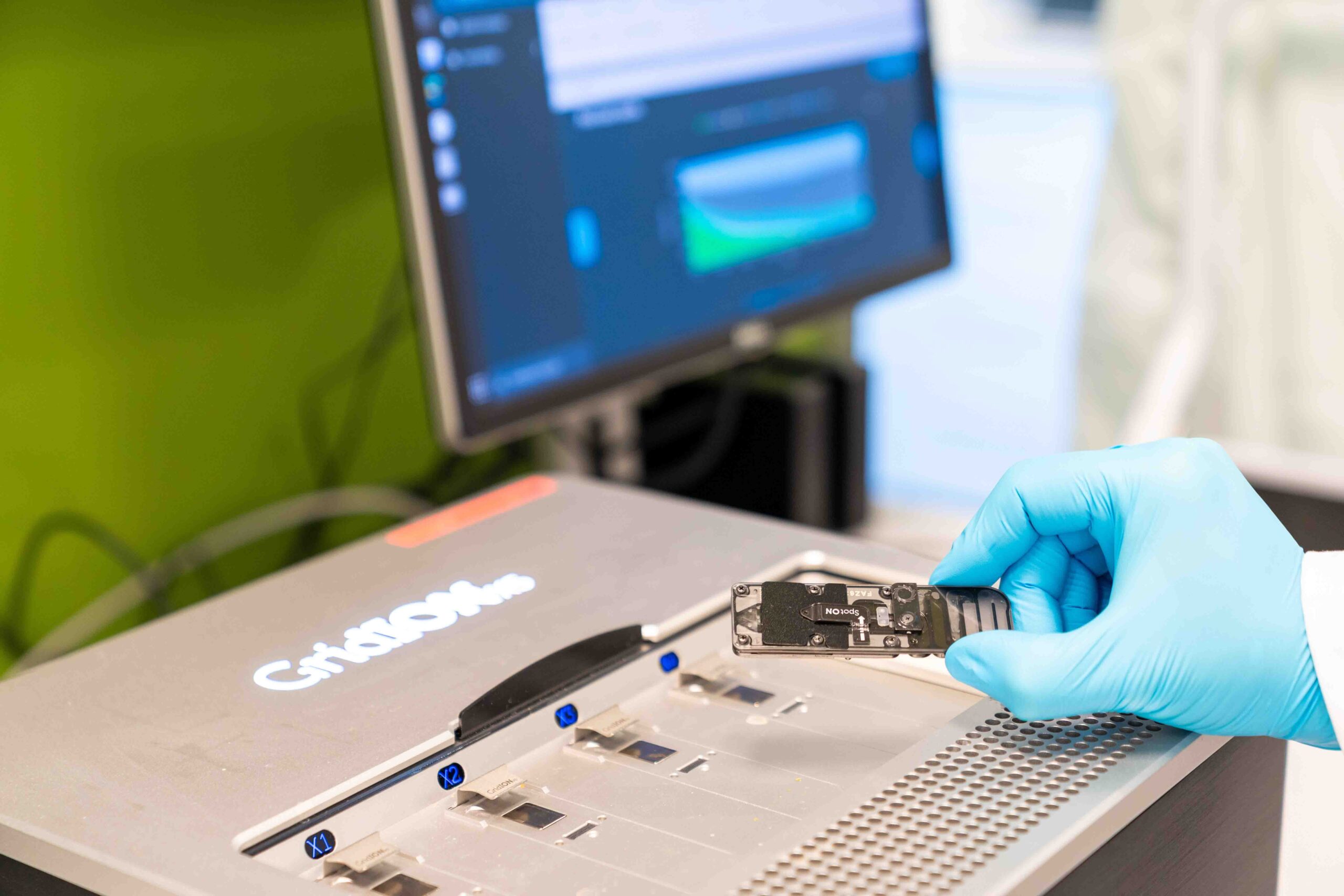
OHMX.bio contributes to the PARIS-BIO study through bulk RNA sequencing of the pre-treatment tumor biopsy samples, as well as testing out novel methods to investigate the genomics and epigenomics of FFPE samples. Once all 100 participants have been enrolled and their biopsies collected, OHMX.bio will perform high-throughput sequencing of the full sample cohort. The resulting transcriptomic data form the basis for calculating the PCAI ImmunoScore for each patient.
This is precisely the type of clinical research application where our end-to-end omics infrastructure adds value: from sample receipt and quality control to sequencing and bioinformatics, under an ISO-certified quality management system aligned with GCLP principles. Working with clinical tumor tissue in a regulated research setting requires both technical precision and robust documentation, and this is what we deliver.
The broader significance of PARIS-BIO goes beyond Darolutamide. If the PCAI ImmunoScore proves predictive of treatment response in this setting, it opens a path toward RNA sequencing-based companion diagnostics for neoadjuvant therapy in prostate cancer. Rather than treating all high-risk patients uniformly, clinicians could use a pre-treatment biopsy and a genomic score to identify who is most likely to benefit.
This reflects a wider shift in oncology: moving from stage-based treatment decisions toward molecularly informed patient selection. Transcriptomic biomarkers, derived from the same biopsy material already collected for diagnosis, are well-positioned to play a central role in that transition.
The PARIS-BIO study is currently recruiting in Sweden, with primary data collection expected to be completed in June 2027.