Top nanopore sequencing applications in clinical and translational research

Nanopore sequencing applications in clinical and translational research: an overview

Oxford Nanopore sequencing reads DNA or RNA by tracking shifts in ionic current as single molecules move through protein nanopores set within a membrane1. As each nucleotide, or short k-mer, passes through the pore, it changes the current in a measurable pattern. The system captures these signal changes in real time and converts them into sequence data while the run is still underway.

Because the platform senses native molecules directly, it can sequence DNA and RNA without mandatory amplification and can retain information on molecular features such as base modifications and transcript structure. Read lengths range from short fragments to ultra-long molecules, with routine libraries often producing reads of approximately 10–25 kb, depending on DNA or RNA quality and library preparation. Among the most important clinical applications of nanopore sequencing are pathogen detection, cancer genomics, rare disease diagnostics, metagenomics, and methylation profiling.

The clinical value of nanopore sequencing comes largely from read length and speed. Long reads can span repetitive elements, paralogous regions, mobile elements, gene fusions, and complex structural variants that short-read sequencing often resolves incompletely. This makes nanopore sequencing relevant for pathogen surveillance, oncology, rare disease research, pharmacogenomics, and epigenomic profiling where variant context and structural continuity matter.

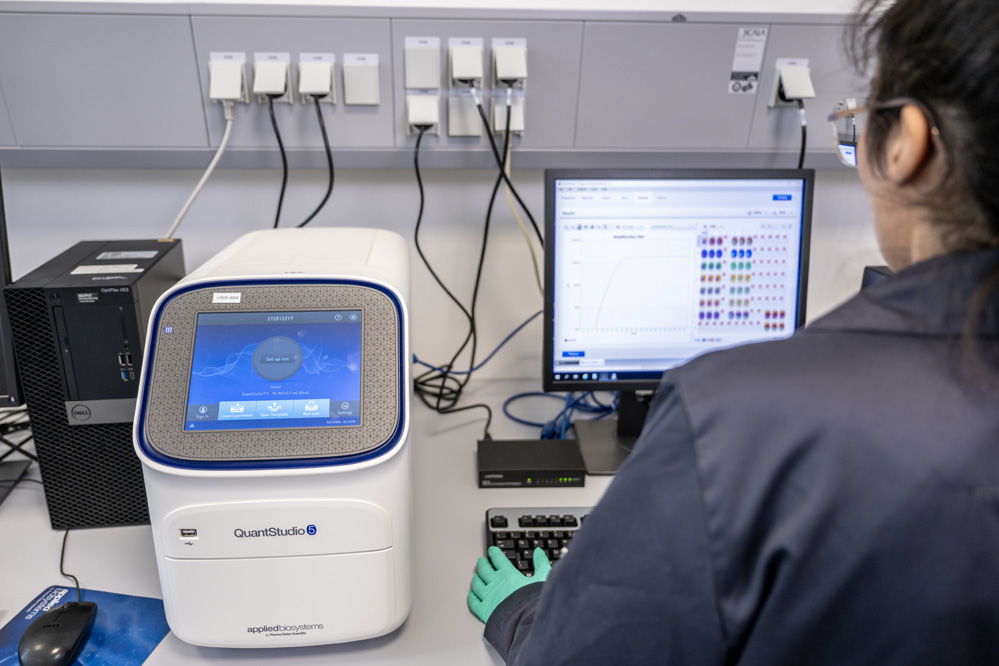
OHMX.bio operates Oxford Nanopore technology within its ISO-certified facilities in Ghent to support robust translational research pipelines from study design and sample processing through sequencing, data analysis, and interpretation support.

Rapid pathogen detection and metagenomics for outbreak surveillance

Nanopore sequencing enables real-time detection of bacterial and viral pathogens by generating sequence data while the run is still in progress. This allows clinical and translational teams to identify pathogens, assign species or strain-level classifications, and detect antimicrobial resistance (AMR) genes or resistance-associated mutations within the same workflow. Because Oxford Nanopore sequencing can produce long reads, it can also help resolve plasmids, mobile genetic elements, and genomic contexts that influence the spread of resistance determinants.

During the SARS-CoV-2 pandemic, nanopore sequencing supported genomic surveillance by enabling rapid lineage assignment, mutation tracking, and monitoring of viral transmission patterns2. These data helped public health and research teams follow variant emergence and evaluate infection dynamics across local, regional, and international settings. In bacterial disease, rapid profiling of Mycobacterium tuberculosis can identify mutations associated with resistance to key anti-tuberculosis drugs, including rifampicin and isoniazid, supporting faster stratification of samples for drug-resistance research and clinical investigation.

Metagenomic nanopore sequencing extends this utility by analysing nucleic acids directly from clinical specimens such as blood, cerebrospinal fluid, and respiratory swabs. This culture-independent approach can detect unexpected, slow-growing, or difficult-to-culture organisms and reduces diagnostic turnaround from several days to a few hours when sample quality, pathogen load, and workflow design are suitable.

Portable devices such as MinION make nanopore sequencing suitable for field-deployable outbreak surveillance. In these settings, rapid local sequencing can guide containment strategies, support sampling priorities, and reduce delays caused by centralised testing. For translational researchers, the same workflow provides actionable genomic data for tracking pathogen evolution, resistance dissemination, and host-associated infection dynamics in near real time.

Cancer genomics and structural variation analysis

Long nanopore reads provide a direct method for resolving complex structural variation in cancer genomes. By sequencing native DNA fragments that extend across large genomic intervals, Oxford Nanopore technology can identify somatic events such as large deletions, tandem duplications, inversions, chromosomal translocations, and complex rearrangements involving multiple breakpoints. These alterations can disrupt tumour suppressor genes, activate oncogenes, generate fusion genes, or remodel regulatory regions that control malignant cell behaviour.

Structural variants frequently contribute to tumour initiation, progression, metastatic potential, and therapeutic resistance. However, many of these events remain difficult to detect with conventional short-read whole-genome sequencing because short reads often cannot span repetitive elements, segmental duplications, low-complexity regions, or rearranged breakpoints with sufficient continuity. Long reads preserve physical linkage across affected loci, which improves breakpoint resolution and supports more accurate reconstruction of cancer genome architecture.

Nanopore sequencing can analyse sequence variation and DNA methylation on the same native molecule, which is a major strength in cancer genomics. Depending on assay design and sample quality, a single nanopore sequencing run can capture somatic structural variants and epigenetic alterations simultaneously, without bisulfite conversion or parallel methylation arrays. Because the platform reads native DNA, it measures genetic rearrangements and methylation states on the same individual molecules. This direct coupling reveals how structural changes correlate with allele-specific methylation, exposes subclonal diversity, and provides a more complete picture of tumour heterogeneity than split workflows can offer.

For translational oncology teams, nanopore sequencing supports clonal architecture profiling by linking structural rearrangements, epigenetic regulation, and variant context within one sequencing workflow.

Inherited and rare disease diagnostics

Patients with rare Mendelian disorders often undergo sequential single-gene tests, targeted panels, exome sequencing, and functional assays before clinicians reach a molecular diagnosis. This diagnostic pathway can leave causal variants unresolved when disease mechanisms involve long-range haplotypes, repetitive regions, pseudogene interference, or structural rearrangements that standard short-read exomes do not capture reliably.

Long-read nanopore sequencing helps address these limitations by preserving physical linkage across extended genomic intervals. This makes it possible to phase distant variants across parental haplotypes, which can clarify compound heterozygosity, allele-specific pathogenicity, and inheritance patterns in families with suspected monogenic disease.

Long reads also improve detection of large deletions, duplications, inversions, repeat expansions, and complex rearrangements in clinically relevant genes. Structural variation affecting SMN1 in spinal muscular atrophy and rearrangements in DMD in Duchenne muscular dystrophy are important examples. In both cases, gene size, repetitive sequence, and paralogous regions can make short-read interpretation difficult.

Rapid whole-genome nanopore sequencing protocols add further clinical utility in acute care settings. Rapid whole-genome sequencing protocols have shown that molecular diagnoses can be returned within hours in selected critical-care settings. This timeframe supports earlier identification of inherited metabolic disorders, neurodevelopmental syndromes, immunodeficiencies, and other severe genetic conditions presenting in the neonatal period. Access to genomic evidence within this window allows clinicians to adjust treatment, refine monitoring, start targeted therapies where indicated, or stop interventions unlikely to benefit the patient. The speed of result delivery matters most in the intensive care setting, where clinical decisions carry immediate consequences. Shorter turnaround times may reduce the diagnostic odyssey, support earlier clinical decision-making in the NICU, and facilitate earlier genetic counselling for families.

For translational research teams, long-read sequencing can strengthen rare disease workflows by combining variant detection, haplotype resolution, and structural interpretation in a single genome-wide assay.

Epigenomics and methylation profiling

Nanopore sequencing detects DNA base modifications directly from the raw electrical signal generated as native DNA passes through the nanopore. Modified bases alter ionic current patterns in ways that can be distinguished computationally from unmodified sequence context. This enables detection of epigenetic marks such as 5-methylcytosine and 6-methyladenine without chemical conversion, antibody enrichment, or amplification-dependent workflows.

This direct detection model avoids several limitations of bisulfite sequencing. Chemical bisulfite conversion can degrade DNA, reduce library complexity, and introduce sequence and coverage bias, especially when input material is limited or DNA integrity varies. Because nanopore sequencing preserves native molecules, it retains both sequence and modification information across long genomic intervals.

In oncology research, this capability supports profiling of aberrant methylation patterns that contribute to tumour biology. Promoter hypermethylation can silence tumour suppressor genes, while broader methylation changes can define tumour subtype, lineage state, and clonal evolution. Long nanopore reads can place these methylation states in genomic context, including structural variants, regulatory regions, and allele-specific haplotypes.

Beyond cancer, nanopore-based methylation profiling can support studies of imprinting disorders, developmental syndromes, and other conditions where disrupted epigenetic regulation contributes to disease mechanisms. For translational researchers, nanopore sequencing provides a single-assay approach that simultaneously delivers genetic and epigenetic information from the same sample, improving molecular interpretation without separating variant detection from methylation analysis.

Transcriptomics and full-length RNA sequencing

Nanopore sequencing reads full-length RNA-derived molecules, so transcript structure remains intact across complete isoforms rather than being inferred from short fragments. cDNA sequencing first reverse-transcribes RNA and then prepares libraries from the resulting cDNA, which gives researchers practical flexibility when input material, sample quality, or storage conditions vary. Direct native RNA sequencing takes a different route. The RNA molecule itself passes through the nanopore, preserving strand orientation and retaining molecular features that short-read RNA-seq usually loses during fragmentation and reverse transcription.

Long reads give transcriptomics a direct view of isoform structure. They can separate alternative promoter usage, exon inclusion or skipping, intron retention, alternative polyadenylation, and complex splice patterns within individual molecules. This matters mechanistically because isoform changes can alter open reading frames, remove regulatory domains, or shift untranslated regions that control transcript stability. In lung adenocarcinoma, for example, detection of MET exon 14 skipping helps identify transcripts that disrupt receptor degradation and can influence targeted therapy decisions.

Nanopore transcriptomics also improves gene fusion analysis in hematological malignancies. A single full-length read can cross a fusion junction and retain the neighbouring exon structure, allowing researchers to distinguish productive oncogenic transcripts from partial or ambiguous rearrangement signals.

Direct RNA sequencing adds epitranscriptomic resolution by detecting RNA base modifications from the native electrical signal. These marks can influence transcript stability, localisation, splicing, and translational efficiency. For translational research, nanopore RNA sequencing connects isoform diversity, fusion biology, alternative splicing, and RNA modification patterns within one molecular workflow.

Future trends and multi-omic integration

Nanopore sequencing is expanding into multi-omic workflows that connect genome structure, epigenetic regulation, and transcript output within the same biological system. Single-cell nanopore sequencing is an emerging area with potential to resolve cell-specific isoforms, structural variants, and methylation states that bulk assays can obscure. Integration with spatial transcriptomics can add tissue context, linking long-read transcript structures to anatomical regions, tumour niches, inflammatory compartments, or developmental gradients. Chromatin conformation capture methods such as Pore-C further extend nanopore sequencing by mapping long-range DNA interactions, supporting analysis of enhancer-promoter contacts, structural rearrangements, and three-dimensional genome organization.

A central advantage of nanopore sequencing is that a single run can generate genomic, epigenomic, and transcriptomic information from native molecules, depending on assay design. These data can be integrated with proteomic datasets to validate downstream functional effects, such as altered pathway activity, aberrant protein expression, or disrupted regulatory networks.

Together, these applications show how long-read sequencing is moving from a niche specialty tool to a central clinical and translational platform. Its value lies in connecting variant structure, regulatory state, and molecular function in ways that fragmented assays cannot easily achieve. Research groups adopting this technology can work with an experienced CRO such as OHMX.bio to de-risk platform implementation, manage complex sample types, and guide multi-omic project design from wet-lab execution through bioinformatics interpretation.

Do you have questions about nanopore sequencing?

Fill out the form below and our experts will get back to you as soon as possible!

References

  1. Oxford Nanopore Technologies. How nanopore sequencing works [Internet]. [cited 2026 Jul 1]. Available from: https://nanoporetech.com/platform/technology

  2. Bull, R. A., Adikari, T. N., Ferguson, J. M., Hammond, J. M., Stevanovski, I., Beukers, A. G., Naing, Z., Yeang, M., Verich, A., Gamaarachchi, H., Kim, K. W., Luciani, F., Stelzer-Braid, S., Eden, J.-S., Rawlinson, W. D., van Hal, S. J., & Deveson, I. W. (2020). Analytical validity of nanopore sequencing for rapid SARS-CoV-2 genome analysis. Nature Communications, 11, 6272. https://doi.org/10.1038/s41467-020-20075-6

Search all posts

Popular news & events

Tags

OHMX..bio logo
Privacy Overview

This website uses cookies so that we can provide you with the best user experience possible. Cookie information is stored in your browser and performs functions such as recognising you when you return to our website and helping our team to understand which sections of the website you find most interesting and useful.

Cookie statement

Last updated:  19-09-2024

This cookie statement is drafted and managed by OHMX.bio NV,

hereafter referred to as “OHMX.bio”.

OHMX.bio has its headquarters at Proeftuinstraat 86, 9000 Gent, Belgium, registered with company number XXX.

For all questions and/or remarks, please contact us at the address mentioned above or at the e-mail address privacy@ohmx.bio.

USE OF COOKIES


OHMX.bio considers it important that you can view, listen to, read or experience our website content at any place and at any time via various media platforms. We want you to be able to use interactive features and provide services tailored to your needs. Therefore OHMX.BIO uses online techniques like cookies, scripts and similar technologies (hereafter referred to as ‘cookies’). These help us facilitate the use of the website and improve its functionality, by collecting (personal) data of our website visitors via their website usage.


In this cookie statement, OHMX.bio wishes to inform you what kind of cookies are used and why.

OHMX.bio can amend the cookie statement at any time. This can happen, for example, in the context of changes to its services or the applicable legislation. The amended statement will then be published on the OHMX.bio websites and will apply from the moment it is published.


If the use of certain cookies also involves the processing of “personal data”, the OHMX.bio Privacy Statement is also applicable.


WHAT ARE COOKIES?


A cookie is a small data file that is installed in the browser of your computer or mobile device by a website's server or application when you visit a website or use a (mobile) application.

The cookie file contains a unique code with which your browser can be recognized during the visit to the online service or during consecutive, repeated visits. They generally make the interaction between the visitor and the website or application easier and faster and help the visitor to navigate between the different parts of a website or application. They allow us to retain certain settings, such as your language choice or to optimize your user experience.


There are different types of cookies that can be distinguished according to their origin, function and lifespan. This is explained further in the next section.

TYPES OF COOKIES

How long are cookies stored?

Cookies can be stored on your computer or mobile device for different periods of time. Depending on the type, they (and the information they collect) are automatically deleted when you close your browser (these are the so-called “session cookies”), in other cases, these remain stored for a longer period of time and can also be used during a subsequent visit to this website (these are the so-called “permanent cookies”).

Consult the detailed information on OHMX.bio cookies (below) to know the retention periods.

Who places and manages cookies?

First-party cookies

First-party cookies are managed by OHMX.bio and are specific to the visited or used online service.

Third party cookies

Third party cookies are managed and placed by a third party. This happens during your visit or use of the website. These ensure that certain information is sent to third parties by your visit to the website.

Why cookies?

Necessary cookies

Necessary or essential cookies are necessary for the operation of the website. It is therefore advised not to disable these.

Functional cookies

These are cookies that ensure that the website functions properly. Examples of some functions performed:

- remembering your login details

- ensuring the security of your login details

- ensuring the uniformity of the layout of the website

Performance and analysis cookies

On the basis of these cookies, information is collected about the way visitors use our website. This is done with the intention to improve the content of our websites, to further adapt it to the wishes of the visitors and to increase the usability of our websites. Like for example google analytics.

Social media cookies

The website can implement so-called embedded elements of other third parties, such as YouTube, Twitter and Facebook. These are used to integrate social media into the website via plug-ins.

Other cookies

These are cookies that do not belong to one of the above categories. For example, cookies that can be used to make web analyzes themselves to optimize the website. In addition to the above-mentioned performance and analysis cookies, other web analysis cookies can be used. These will probably have to be disabled because identifiable personal data may be processed here. This is not the case with the mentioned performance analysis cookies.

OHMX.bio  uses different types of cookies.


Cookie Description Duration Type
cookielawinfo-checkbox-necessary This cookie is set by GDPR Cookie Consent plugin. The cookies is used to store the user consent for the cookies in the category "Necessary". 1 hour Necessary
__utma This cookie is set by Google Analytics and is used to distinguish users and sessions. The cookie is created when the JavaScript library executes and there are no existing __utma cookies. The cookie is updated every time data is sent to Google Analytics. 2 years Performance
__utmc The cookie is set by Google Analytics and is deleted when the user closes the browser. The cookie is not used by ga.js. The cookie is used to enable interoperability with urchin.js which is an older version of Google analytics and used in conjunction with the __utmb cookie to determine new sessions/visits. Performance
__utmz This cookie is set by Google analytics and is used to store the traffic source or campaign through which the visitor reached your site. 5 months Performance
__utmt The cookie is set by Google Analytics and is used to throttle request rate. 10 minutes Performance
__utmb The cookie is set by Google Analytics. The cookie is used to determine new sessions/visits. The cookie is created when the JavaScript library executes and there are no existing __utma cookies. The cookie is updated every time data is sent to Google Analytics. 30 minutes Performance


HOW CAN YOU TURN OFF COOKIES?


If you choose to disable cookies, you can do so for the browser you use:


If you use different devices to visit this website, make sure that your cookie preferences are set on the browser of every device.


Please note that disabling certain cookies may result in the malfunction of related features on the website e.g. certain graphics may not show the way they are meant to, or you may not be able to use certain services.

CHANGES TO THIS COOKIE STATEMENT

OHMX.BIO may amend this Cookie Statement in accordance with certain technical, legal or commercial requirements and developments. We will inform you accordingly, taking into account the importance of the changes that have been made. You may find the date on which this Cookie Statement was last modified at the top of this Cookie Statement.