Biomarkers in Clinical Trials: Types, selection, and validation

1. Introduction to biomarkers

Biomarkers are characteristics that help us monitor biological and pathological processes or evaluate the effects of therapy. The National Institutes of Health (NIH) and the U.S. Food and Drug Administration (FDA) define a biomarker as “a defined characteristic that is measured as an indicator of normal biological processes, pathogenic processes, or biological responses to an exposure or intervention, including therapeutic interventions”. This definition, formalised in the FDA-NIH BEST (Biomarkers, EndpointS, and other Tools) framework, underpins how biomarkers are classified and used across all phases of clinical development.11

Biomarkers offer a valuable tool for monitoring risk factors and biological processes, providing an objective and reproducible approach for tracking health status or disease progression. In clinical research, choosing the right biomarker is crucial since it helps guide clinical decisions and treatment plans for patients. Moreover, biomarkers can assist in therapy response assessment, and patient stratification. Different biomarker analysis technologies, quantitative polymerase chain reaction (qPCR), enzyme-linked immunosorbent assay (ELISA), flow cytometry, and RNA sequencing (RNA-seq), offer various advantages depending on accuracy needs, sample types, and research goals1,4.

2. Understanding biomarkers in clinical studies

Biomarkers serve a significant role in clinical investigations, they enable physicians and researchers to understand, detect, and control numerous illnesses. It has several sorts of biomarkers, which are classified into broad groupings, each having a specific significance in the therapeutic setting.
Diagnostic biomarkers aid in early detection and accurate diagnosis of specific diseases, such as prostate cancer, by detecting the presence or absence of the disease. Prognostic biomarkers predict the course and fate of an illness, allowing clinicians to anticipate a patient’s reaction to treatment and disease development. This is particularly crucial in cancer because biomarkers can predict aggressive disease growth. Predictive biomarkers indicate the probability of a patient’s reaction to a given therapy, allowing clinicians to tailor treatment plans, such as genetic testing for mutations in cancers.
Pharmacodynamic (PD) biomarkers quantify the biological activity of a drug, following up on the effectiveness of a treatment and implying dose adjustments. In chemotherapy, the monitoring of blood markers is done to assess how effective treatments have been and propose any alterations. Biomarkers are crucial for disease identification, patient stratification, and treatment monitoring, enhancing physicians’ understanding of disease mechanisms, optimizing patient outcomes, and delivering personalized therapies, and their types are essential for effective clinical research 4,6.

3. Biomarker selection criteria for clinical trials

Selecting the right biomarker for an early clinical study requires balancing scientific validity, operational feasibility, and regulatory requirements. The FDA-NIH BEST framework provides a structured approach to this decision.11 Key selection criteria include:

  • Biological rationale: is there mechanistic evidence linking the biomarker to the drug’s mechanism of action or the disease process under study?
  • Analytical feasibility: can the biomarker be reliably measured in the available sample type (tumour biopsy, blood, FFPE, liquid biopsy)?
  • Pre-analytical stability: does the biomarker survive the collection, processing, and shipping conditions of a multisite clinical trial?
  • Assay turnaround time: if used for patient stratification, can results be returned within the enrolment window?
  • Regulatory precedent: has this biomarker class been accepted in prior submissions for similar indications?

4. Fit-for-purpose validation: how much is enough?

Not all biomarker assays require the same validation depth. The fit-for-purpose principle matches validation stringency to the intended use of the biomarker, avoiding over-investment in exploratory contexts and under-investment where regulatory decisions depend on the data.12

Exploratory biomarkers in Phase I, used for hypothesis generation, require minimum validation: demonstration of acceptable precision, basic stability, and absence of gross matrix effects. Biomarkers intended for patient stratification or regulatory decision-making require full analytical validation, including cross-laboratory reproducibility and reference standard characterisation. 12

5. Key technologies for biomarker detection

5.1 Quantitative polymerase chain reaction

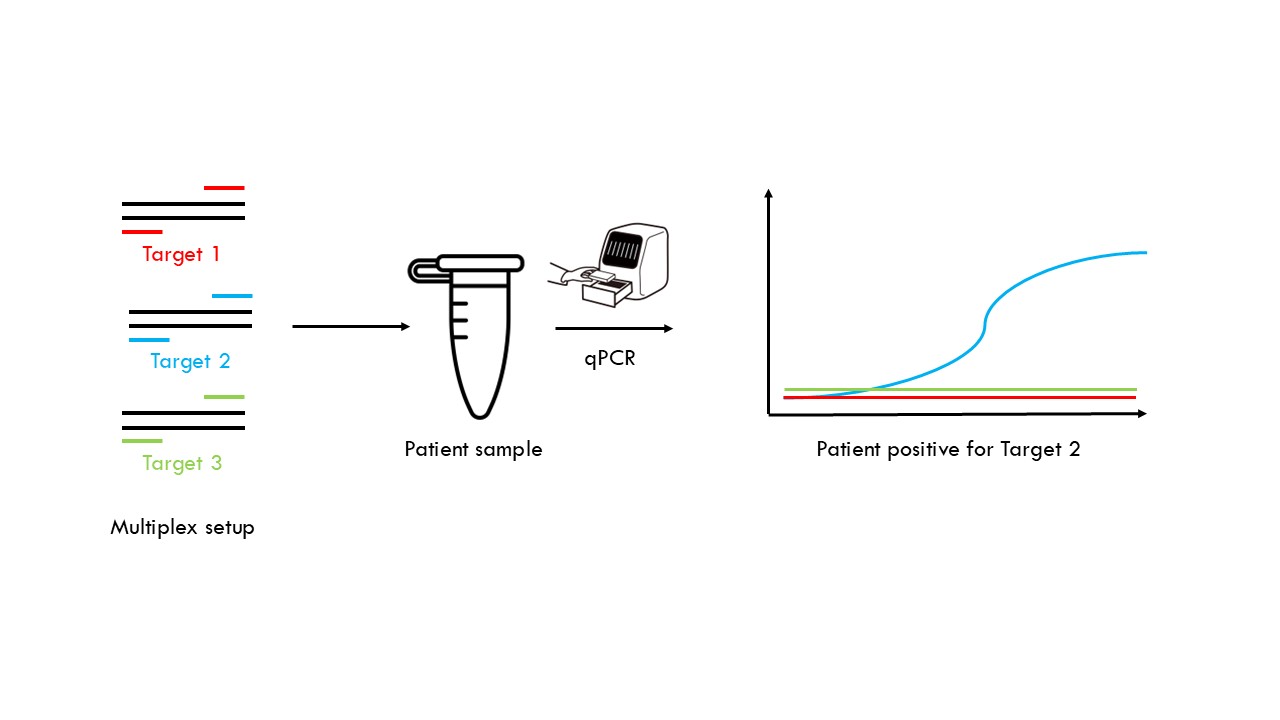
Strengths: qPCR is a sensitive and cost-efficient method used for biomarker identification, gene expression analysis, mutation detection, and infectious disease studies. It allows early disease diagnosis using low biomarker levels and offers real-time monitoring for enhanced accuracy and reduced contamination risks. It measures mRNA levels to explain gene activity and disease pathways. qPCR remains the gold standard for targeted validation of specific gene expression biomarkers identified through discovery approaches such as RNA-seq.

Applications: qPCR is commonly applied in a wide variety of studies, such as gene expression studies, mutation detection, and research involving infectious diseases wherein accurate detection of nucleic acid is needed.

Limitations: The poor multiplexing ability of qPCR makes it ineffective for measuring multiple targets in a single reaction, and its focus on specific genes may not be suitable for complex biological systems, necessitating additional techniques for full biomarker analysis 2,7.
Quantitative polymerase chain reaction

5.2 Digital polymerase chain reaction (dPCR)

Strengths: dPCR delivers exceptional precision and sensitivity by enabling absolute quantification of nucleic acids without standard curves. Through sample partitioning into thousands of individual reactions, it achieves high tolerance to inhibitors and superior detection of low-abundance targets. It is particularly effective for resolving rare genetic variants and minute fold-changes, offering higher accuracy than qPCR at low concentrations. This makes dPCR an ideal technology for confirming specific rare mutations in clinical samples where absolute copy number resolution is paramount.

Applications: dPCR is extensively used in liquid biopsy for ctDNA monitoring, viral load quantification, and copy number variation (CNV) analysis, where precise detection of rare events is required.

Limitations: Like qPCR, dPCR has restricted multiplexing capacity and is not suitable for broad biomarker discovery. It necessitates specialized equipment, involves higher costs per sample, and its dynamic range is capped, potentially leading to digital saturation at very high target levels.

5.3 ELISA (Enzyme-Linked Immunosorbent Assay)

Strengths: ELISA is a widespread, sensitive technology employed to detect several sorts of biomarkers: hormones, viral and bacterial antigens, and antibodies. As the gold standard for immunoassays, ELISA gives exceptionally high sensitivity and specificity and can detect concentrations as low as 1 ng/mL. It remains the method of choice for protein biomarker quantification in regulated bioanalysis where a validated antibody is available.

Applications: ELISA is a crucial tool for detecting protein biomarkers in blood or biofluids, aiding in immune response investigation and illness diagnosis. Its sensitivity in identifying low biomarker concentrations is crucial in early illness detection. ELISA is accessible, cost-effective, and readily available, making it a viable option in most laboratories.

Limitations: ELISA has a limitation as it can only detect a single analyte, necessitating multiple assays for biomarker evaluation, and sample quality can affect outcomes, suggesting it should be used in conjunction with other techniques for extensive research 3,8.
ELISA (Enzyme-Linked Immunosorbent Assay)

5.4 Flow cytometry

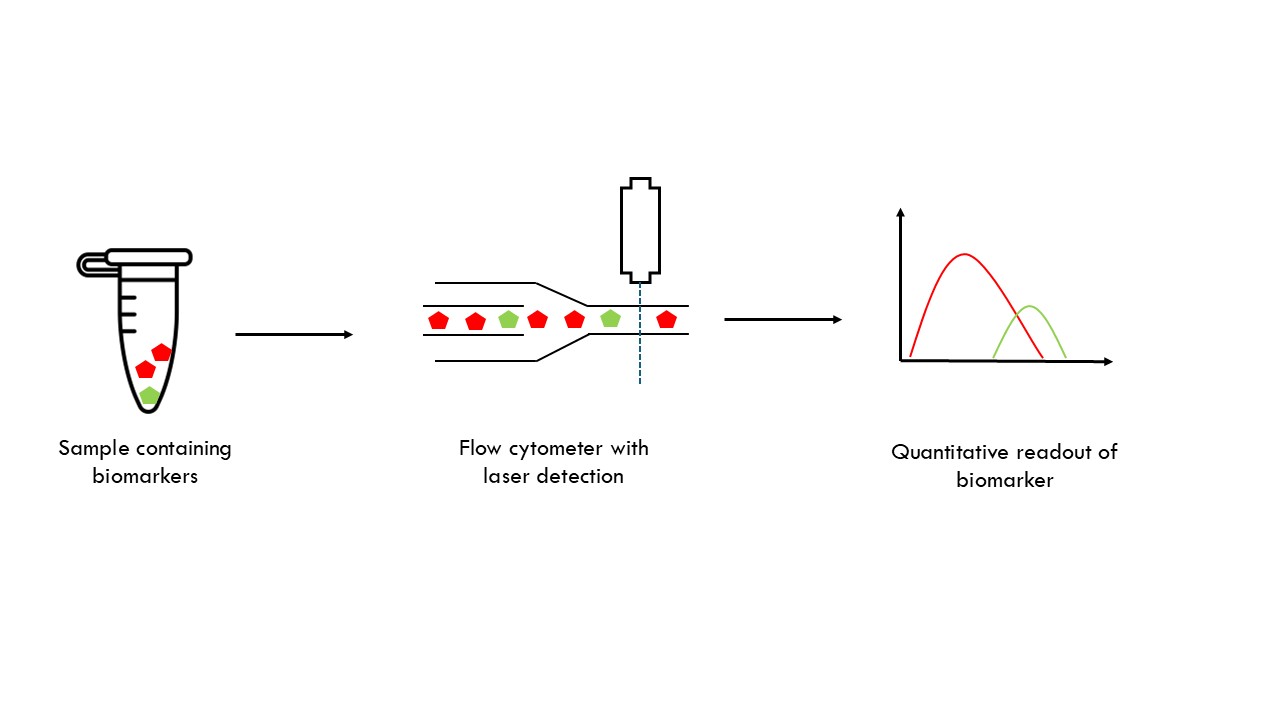
Strengths: Flow cytometry provides insight into the characteristic features of individual immune cells, making it possible to analyze more than 40 markers in multiparametric analysis. This is quite important in the study of immuno-oncology. Due to its ability to process tens of thousands of cells per second, it is also very important in clinical trials and immune profiling of diseases, among other applications.
Applications: Flow cytometry is a critical tool for examining protein markers, immune cell functions, and cell surfaces, particularly in cancer research, treatment response tracking, patient-specific tactics, and early clinical trials for complicated illnesses.
Limitations: Flow cytometry, despite its benefits, has drawbacks such as the need for specialized equipment, the possibility of inconsistent results from different labs, and poor sample quality, which affects data accuracy 9.
Flow cytometry

5.5 RNA-seq (RNA sequencing)

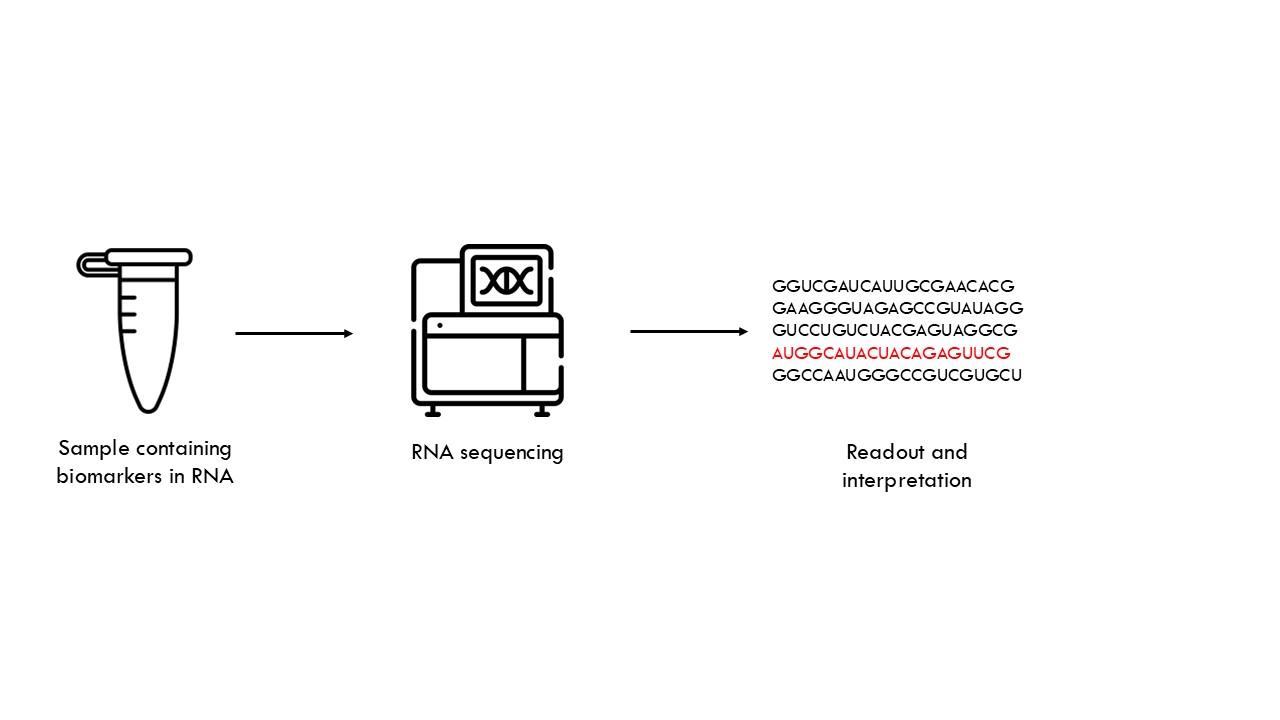
Strengths: RNA-Seq is a highly advanced technique that studies the entire transcriptome, capturing coding and non-coding RNAs, isoforms, and splicing processes. RNA-Seq is useful in identifying biomarkers in malignancies like triple-negative breast cancer, as it helps tailor treatment based on specific transcriptome profiles, improving results and guiding more accurate therapeutic techniques, despite the lack of recognised biomarkers in this field. When combined with Ribo-seq (ribosome profiling), RNA-seq can additionally reveal translational biomarkers, a dimension of gene regulation entirely invisible to transcript-level analysis alone.
Applications: RNA-Seq is instrumental in identifying biomarkers for malignancies, enabling the development of personalized treatments based on specific transcriptome profiles, even in the absence of established biomarkers.
Limitations: Although RNA-Seq has benefits, it presents drawbacks such as cost and the technical complexity of making it practical in resource-scarce setups. The generated volume of data demands sophisticated tools to analyze bioinformatics, leading to complex, time-consuming processes 10.
RNA-seq (RNA sequencing)

6. How to choose the right biomarker type for your study

In the design of a clinical study, appropriate selection of the biomarker type is imperative. It involves careful consideration, and the definition of the goals of the study in advance is important and is considered a preparatory step. Whether the goal is to identify a diagnostic biomarker or monitor the response to therapeutic intervention should be determined during the selection process. In addition, the research questions provided also tend to influence the decision in terms of the selection of the type of biomarkers. Besides these, the selection of the sample type, whether from blood, tissues, or single cells, is equally imperative. Every sample type has specific technological and analytical methods, which strongly impact decisions and the outcome of the whole study.
The budget and available resources must be considered when balancing the desired resolution from biomarker analysis with the associated costs. RNA-sequencing is effective for exploratory studies, while qPCR or ELISA are used for targeted validation of specific biomarkers. The multiplexing factor is another important consideration. When several biomarkers must be simultaneously evaluated, the technologies of flow cytometry support multiparametric analysis which could be very important for immune profiling. Considering such factors in detail helps researchers conclude with the appropriate biomarker type and match technology needed to maintain the success of the clinical study 4-10.

7. Choosing between genomic, transcriptomic, and proteomic biomarkers

For studies evaluating systemic drug effects, multiplatform profiling is often the most informative approach. A practical framework for matching biomarker type to study objective:

  • Genomic biomarkers (DNA mutations, CNVs, fusions): best for patient stratification in genetically defined indications; required for companion diagnostic development
  • Transcriptomic biomarkers (RNA-seq): best for gene expression-based patient stratification, drug MoA studies, and discovery of novel expression signatures
  • Translatomic biomarkers (Ribo-seq): best when transcription and translation are decoupled, such as in mRNA therapeutic studies or drug-induced translational stress responses
  • Proteomic biomarkers (mass spectrometry, ELISA): best for protein-level validation and pharmacodynamic endpoint assessment
  • Epigenomic biomarkers (methylation): best for liquid biopsy applications and companion diagnostics based on stable cfDNA signatures

8. Conclusion

Clinical research success relies on selecting the right biomarker type and technology. This choice is similar to selecting the right tool for the job, as it depends on research aims, available resources, study purposes, sample types, and funding. Exploratory investigations use RNA-seq to detect novel biomarkers, which are validated using qPCR or ELISA in targeted conditions. Each technology has its own capabilities and is adapted for specific study designs. Careful consideration of these parameters can enhance the outcome and efficiency of research. Applying the fit-for-purpose principle to biomarker assay validation ensures that the level of effort is matched to the regulatory and scientific stakes of each measurement, supporting both scientific rigor and operational efficiency.12

Frequently asked questions about biomarkers in clinical studies

A predictive biomarker identifies patients likely to respond (or be harmed) by a specific treatment. A prognostic biomarker indicates the likely disease course regardless of treatment. The distinction is critical for trial design: enrichment strategies are built on predictive biomarkers, not prognostic ones.11
The FDA-NIH BEST (Biomarkers, EndpointS, and other Tools) resource provides a standardised taxonomy for biomarkers used in drug development. It defines seven biomarker categories: diagnostic, monitoring, pharmacodynamic/response, predictive, prognostic, safety, and susceptibility/risk. Familiarity with this framework is increasingly expected in regulatory submissions.11
Not necessarily. The fit-for-purpose principle allows exploratory biomarkers in Phase I to operate under minimum validation, provided the assay’s limitations are acknowledged. Full analytical validation is required for biomarkers used in regulatory decision-making or patient stratification in interventional trials.12

A surrogate endpoint is a biomarker that has been formally accepted by regulators as a basis for accelerated approval, based on evidence that it is reasonably likely to predict clinical benefit. Not all biomarkers are surrogates; qualification as a surrogate requires extensive clinical evidence of correlation with patient outcomes.11

Search all posts

Popular news & events

Tags

Do you have questions about biomarkers for a clinical study?

Fill out the form below and our experts will get back to you as soon as possible!

References

[1] Carlos, A. F., & Josephs, K. A. (2023). The role of clinical assessment in the era of biomarkers. Neurotherapeutics, 20(4), 1001-1018.
[2] Ahmad, A., Imran, M., & Ahsan, H. (2023). Biomarkers as biomedical bioindicators: approaches and techniques for the detection, analysis, and validation of novel Biomarkers of diseases. Pharmaceutics, 15(6), 1630.
[3] Cruz, C. J. G., & Yang, C. C. (2023). Clinical application of serum biomarkers for detecting and monitoring of chronic plaque psoriasis. Frontiers in Molecular Biosciences, 10, 1196323.
[4] Irwin, K. E., Sheth, U., Wong, P. C., & Gendron, T. F. (2024). Fluid biomarkers for amyotrophic lateral sclerosis: a review. Molecular neurodegeneration, 19(1), 9.
[5] Zhou, Y., Tao, L., Qiu, J., Xu, J., Yang, X., Zhang, Y., … & Zhao, Y. (2024). Tumor biomarkers for diagnosis, prognosis and targeted therapy. Signal Transduction and Targeted Therapy, 9(1), 132.
[6] Sahin, D., Di Matteo, A., & Emery, P. (2024). Biomarkers in the diagnosis, prognosis and management of rheumatoid arthritis: A comprehensive review. Annals of Clinical Biochemistry, 00045632241285843.
[7] Becker, C., Riedmaier, I., & Pfaffl, M. W. (2013). Biomarker discovery via RT-qPCR and bioinformatical validation. PCR Technology, 259-270.
[8] Hu, R., Sou, K., & Takeoka, S. (2020). A rapid and highly sensitive biomarker detection platform based on a temperature-responsive liposome-linked immunosorbent assay. Scientific reports, 10(1), 1-11.
[9] Ullas, S., & Sinclair, C. (2024). Applications of Flow Cytometry in Drug Discovery and Translational Research. International Journal of Molecular Sciences, 25(7), 3851.
[10] Cabús, L., Lagarde, J., Curado, J., Lizano, E., & Pérez-Boza, J. (2022). Current challenges and best practices for cell-free long RNA biomarker discovery. Biomarker research, 10(1), 62.
[11] FDA-NIH Biomarker Working Group. (2016). BEST (Biomarkers, EndpointS, and other Tools) Resource [Internet]. Silver Spring (MD): Food and Drug Administration (US). Available from: https://www.ncbi.nlm.nih.gov/books/NBK326791/
[12] Lee, J. W., Devanarayan, V., Barrett, Y. C., Weiner, R., Allinson, J., Fountain, S., … & Wagner, J. A. (2006). Fit-for-purpose method development and validation for successful biomarker measurement. Pharmaceutical Research, 23(2), 312–328. https://doi.org/10.1007/s11095-005-9045-3